Commissioning differently
The context
Commissioners of adult social care services face many challenges. ‘Thorny issues’ they encounter include how to move away from ‘time and task’-based to more outcomes-focused approaches; how to put social value/ethical commissioning into practice; and how to support, develop and sustain new models of care.
This Network will examine these issues, providing time and space for those working in adult social care to share ideas and experiences that could navigate these complex issues and support change.
IMPACT Factfile
- Year: 2024 – 2025
- Delivery Model: Networks
- Themes:
- Resources:
- Discussion Materials (PDF / Easy Read PDF)
What is commissioning?
Commissioning is a continuous process through which Local Authorities, Councils, and Trusts (depending on the UK nation) assess the needs of their communities, determine the required services, and oversee their design, delivery, and evaluation. The ultimate goal is to ensure that resources are effectively used to promote independence and wellbeing, particularly for individuals requiring care and support.
Service provision has shifted significantly over the last two decades, with authorities moving away from direct management and increasingly outsourcing care. The push towards personalisation has also given individuals greater choice and control over their care through personal budgets and direct payments.
Commissioning across the UK
Discussion materials
Before the first Network meeting, IMPACT carried out an evidence review and found:
Challenges and alternatives in commissioning
The increasing privatisation and financialization of social care have reshaped commissioning in the UK. In practice this has meant that services have shifted from publicly managed or non-profit providers to for-profit companies. This concept of ‘competitive tendering’ has led to:
- Workforce exploitation: Cost-cutting has resulted in lower wages for frontline staff.
- Reduced advocacy: Non-governmental organisations (NGOs) now rely on government contracts, limiting their ability to challenge policy and advocate for service users.
- Erosion of trust and creativity: Bureaucratic and financial constraints have created a transactional culture that discourages collaboration and innovation.
Exploring alternative commissioning models
To address systemic issues, new commissioning models are being explored in the literature:
- Joint commissioning: Aligning health and social care funding to improve efficiency, reduce duplication, and enhance service quality. While promising, challenges include increased administrative costs and workforce concerns.
- Micro-commissioning and personalised budgets: Enabling individuals to manage their care through direct funding, promoting autonomy and personalised service provision.
- Outcomes-Based Commissioning (OBC): Focusing on service user outcomes rather than rigid contractual obligations, though transitioning to this model presents financial and logistical challenges.
The role of co-production in ethical commissioning
- The COVID-19 pandemic underscored the need for commissioning that prioritises wellbeing, agency, and human rights.
- Co-production – where service users, professionals, and communities collaborate in service design – is critical to ensuring that care systems reflect real needs.
Key principles of ethical commissioning
This evidence review was used as ‘discussion material’ in the Networks, designed to spark conversation and ideas. It’s a helpful way to surface more evidence, with people in the Networks sharing their own practice knowledge and lived experience
Network meetings
Networks are meeting across the UK, co-ordinated by:
In England:
Peterborough City Council
Wokingham Borough Council
Association for Real Change (ARC) UK
Cumberland Council
In Northern Ireland:
Brain Injury Matters
In Scotland:
People First Scotland
In Wales:
Meilys Heulfryn Smith
Adrian Roper
First Network meeting
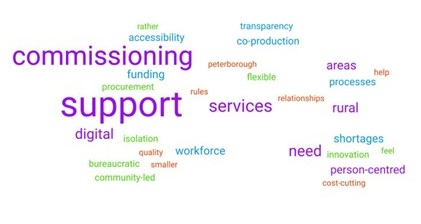
Key themes that emerged in the first Network meeting were:
1. Complexity, transparency, and accessibility Issues
- The system is not transparent – many people are unclear on who makes decisions and how they are made.
- Communication between commissioners, service users, and providers is poor, with limited opportunities for input and feedback.
- There is significant geographical variation in services (“postcode lottery”), which leads to inequalities in care.
2. Lack of personalisation and co-production
- Decisions often overlook unpaid carers and families.
- Co-production is promoted in policy but rarely practiced – service users, particularly those with learning disabilities, feel ignored.
- There is a need for greater use of natural support networks and community assets in service design.
3. Service gaps and crisis-driven support
- Social care is increasingly focused on crisis management rather than preventative, person-centred support.
- Social care is failing to uphold the right to independent living.
- Employment and ongoing support for neurodiverse individuals are major gaps in provision.
4. Issues with commissioning and retendering processes
- Competitive tendering prioritises cost-cutting over quality, making it harder for smaller, high-quality providers to compete.
- Some areas never retender services, while others do so frequently – which raises questions about consistency and best practice.
- Commissioners must follow procurement rules that sometimes conflict with service users’ best interests.
5. The need for innovation and new commissioning models
- Commissioning often discourages innovation – some creative services are deemed “too complicated” despite their effectiveness. Which means that co-design and community-led initiatives exist but are not widely adopted by commissioners.
- Joint or alliance bidding could help smaller providers remain viable.
- However, upcoming changes to procurement rules may offer opportunities for different approaches.
6. Addressing social isolation and unmet needs
- Social care needs to do more to address loneliness and isolation.
- More collaboration is needed with enabling and befriending services.
- People lack accessible information and guidance on available support.
Second Network meeting
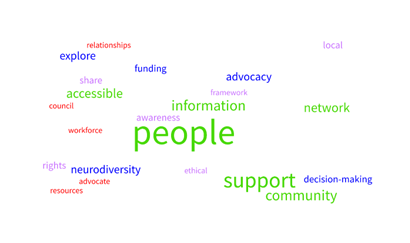
Key themes that emerged in the second Network meeting were:
1. Improving commissioning processes and transparency
- The system is not transparent – many people are unclear on who makes decisions and how they are made.
- Communication between commissioners, service users, and providers is poor, with limited opportunities for input and feedback.
- There is significant geographical variation in services (“postcode lottery”), which leads to inequalities in care.
2. Rethinking the role of support and care relationships
- Decisions often overlook unpaid carers and families.
- Co-production is promoted in policy but rarely practiced – service users, particularly those with learning disabilities, feel ignored.
- There is a need for greater use of natural support networks and community assets in service design.
3. Financial and workforce considerations
- Social care is increasingly focused on crisis management rather than preventative, person-centred support.
- Social care is failing to uphold the right to independent living.
- Employment and ongoing support for neurodiverse individuals are major gaps in provision.
4. Digital and tech-enabled care solutions
- Competitive tendering prioritises cost-cutting over quality, making it harder for smaller, high-quality providers to compete.
- Some areas never retender services, while others do so frequently – which raises questions about consistency and best practice.
- Commissioners must follow procurement rules that sometimes conflict with service users’ best interests.
5. Structural and policy-level barriers
- Bureaucratic Inefficiencies & Funding Allocation Issues – such as: public transport access, resource constraints, and lack of government prioritisation – limit progress.
- Workforce shortages mean care workers can’t easily be replaced if they can’t reach service users.