“Good support isn’t just about services – it’s about having a life.”
IMPACT’s strapline was more than a headline at the 2025 all-Wales embedding event. It became something people returned to again and again, grounding conversations in what really matters to people with learning disabilities and their families: that good support is whether someone can belong, contribute, feel safe, and live the life they choose.
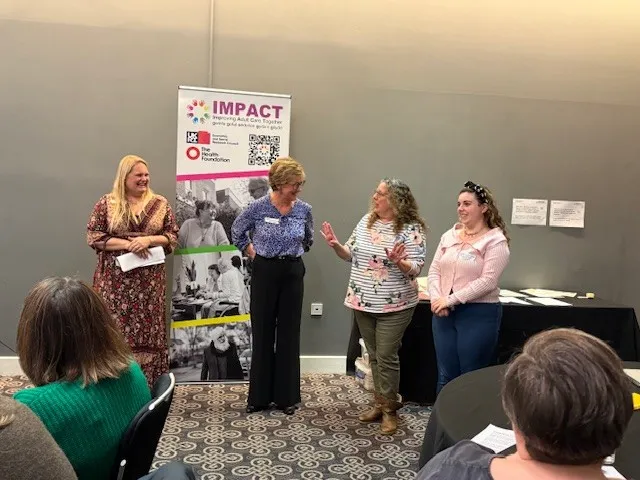
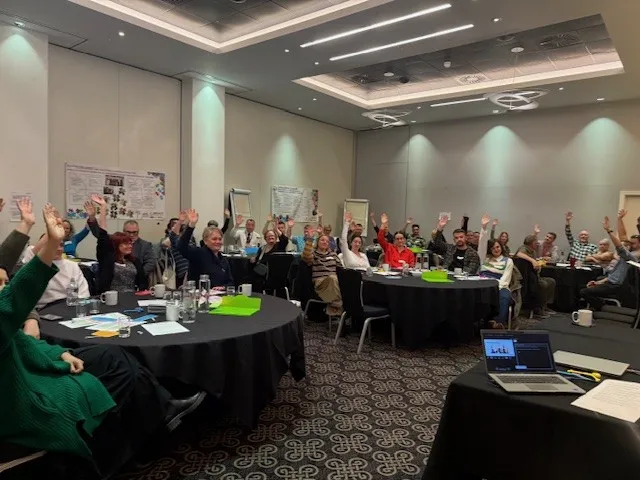
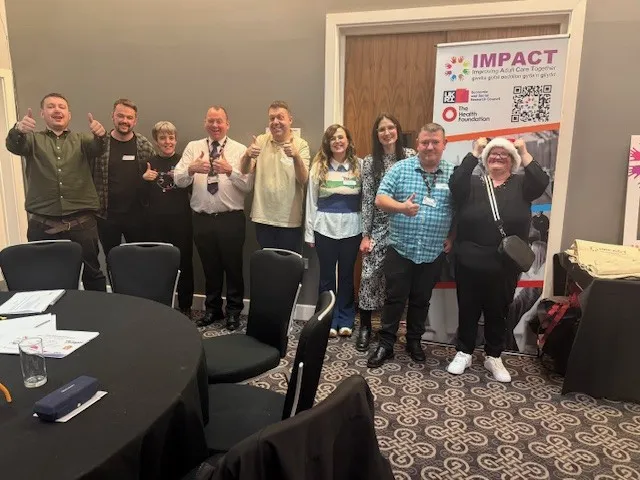
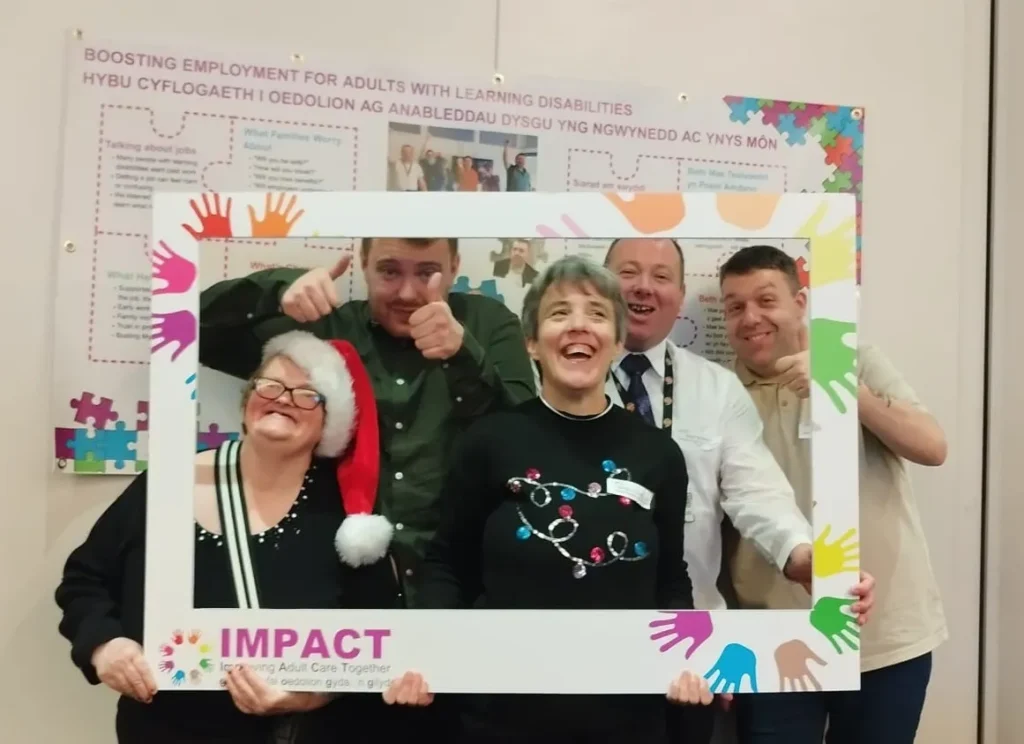
On 3 December 2025, people with lived experience, family-carers, practitioners, third-sector organisations, local authority staff, and policy leaders came together to share learning from three IMPACT projects which emphasise the values of voice, choice, and control for people with learning disabilities.
What emerged over the day was more than a set of project updates. It became a shared story about what helps change stick, and what still gets in the way.
“Transitions shouldn’t feel like falling off a cliff.”
For young people with learning disabilities and their families, the move from children’s to adult services can feel abrupt, confusing, and frightening.
At the event, Alysha and her mum Tracy spoke about having to retell their story again and again, navigate different thresholds, and piece together information from multiple places. Anxiety often peaks not because people lack ambition, but because they lack clarity.
The transitions together project hosted by Pembrokeshire County Council tackled this by putting people back at the centre. Families, young people, professionals and third-sector partners worked together to shape clearer pathways, earlier conversations, and shared information.
A theme that came up lots from lived experience was the importance of being heard early, ideally from around age 14, and knowing that someone will still be alongside you a year later. Continuity, relationships, and trust mattered just as much as any service offer.
“I want to work, but people worry more than I do.”
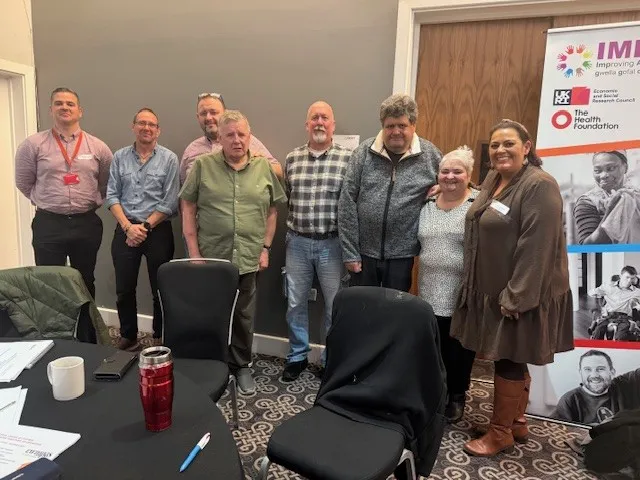
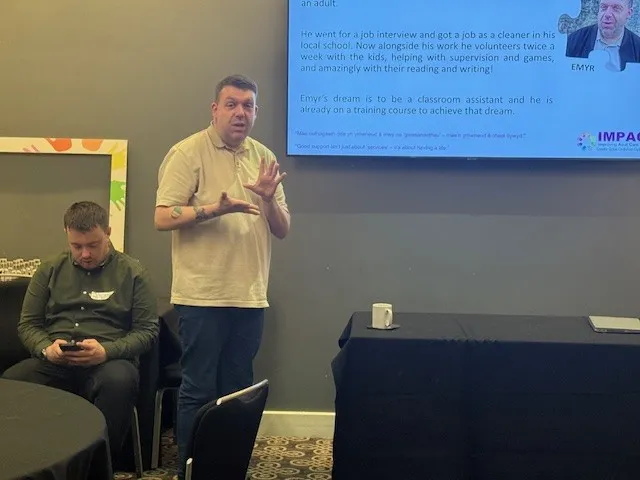
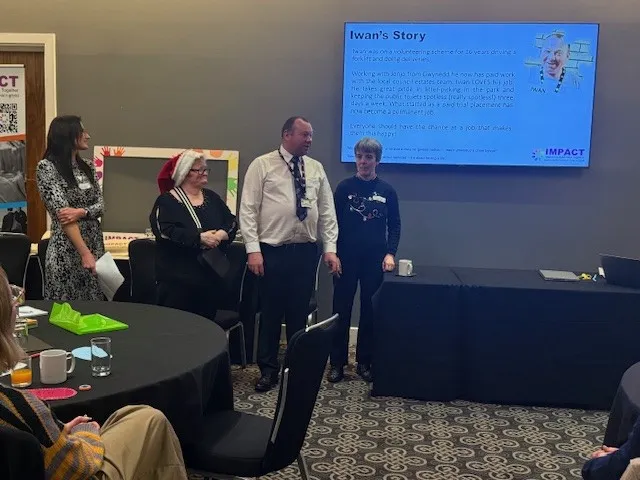
This sentiment reflected the experiences of five adults with learning disabilities, Terry, Iwan, Phyllis, Siwan and Emyr, who travelled down to Cardiff from Gwynedd and Anglesey to stand up and tell their own employment stories, alongside their family members and carers. They were part of the Making Work Work! project, delivered in collaboration with North Wales Together, which focused on family-carer insights into employment barriers.
They spoke with pride, humour and confidence about the jobs they love. About what work gives them: purpose, independence, routine, friendships and identity. And about how long it sometimes took for other people to believe in their ambitions as much as they did themselves.
Despite strong evidence that supported employment works, and that adults with learning disabilities make great employees, fewer than 7% of adults with learning disabilities are in paid work, even though most say they want to be. During the project, family-carers talked openly about the worries they carry: safety, benefits, transport, employer attitudes, and the familiar fear of “what if it all goes wrong?”
The project did not dismiss those fears. It created space for them, and then gently, persistently challenged them. Through honest conversations with families and co-production with people with learning disabilities, long-held myths were named, tested and, in many cases, dismantled.
What made the difference were the stories: Terry talking about finally being paid for work he was already good at; Iwan moving from years of volunteering he didn’t enjoy into a permanent role doing work he loves; Phyllis celebrating decades of valued employment; Siwan and Emyr describing how work opened doors to confidence, new skills and future ambitions.
As expectations shifted, so did possibilities.
The message from the front of the room was unmistakable. Employment is not a “nice-to-have”. It is not just an outcome or a policy target. For the people sharing their stories, employment was simply part of having a meaningful life, on their own terms.
“We didn’t want decisions made about us, without us.”
The theme of the day was personified in the experiences of the Friends United Together Co-operative in Swansea, who made the decision to exercise their voice, choice and control by setting up their own co-operative so they could decide how and what support they wanted.
Faced with commissioning changes that threatened trusted relationships and group support, the Friends chose a different path. With the right support, they pooled their direct payments and created a co-operative that allowed them to stay connected, plan together, remain in charge of their own lives, and pay for consistent support from carers they chose.
Their story was described as inspiring, but also honest. Friends United Together co-operative members Robin, Clive and Marie spoke at the event about the confidence gained through shared decision-making, alongside the very real challenges of navigating complex systems, banking and governance.
What made the difference in establishing the co-operative was the way a team of people and organisations co-operated and supported much like a ‘curling team’ as Rick Wilson, CEO of Community Lives Consortium (CLC), described; the Friends threw the stone to make the change, and Swansea Local Authority, Cwmpas and CLC (the care provider) worked to clear the path ahead.
What happened next mattered just as much
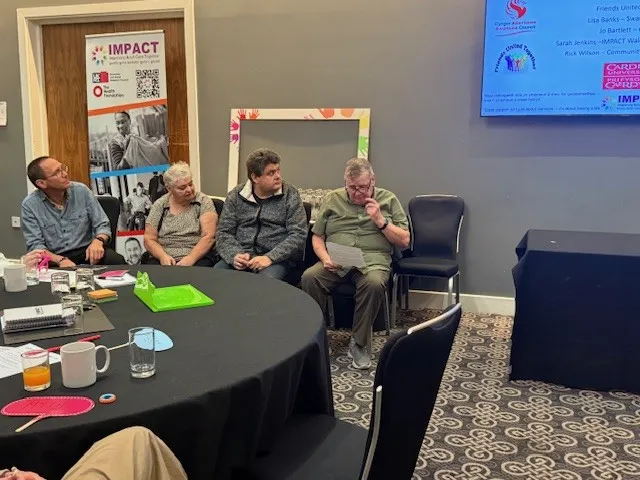
After the presentations, people moved into discussion groups and began talking things through together. The focus shifted from listening to working out how we could learn and share from the projects.
The question people kept coming back to was harder: what needs to change so that these kinds of voice, choice and control are embedded in everyday systems and practice, not just delivered through individual standout projects?
“This works…but only if the system lets it”
People talked about how good the transitions together approach felt: joined-up, human, thoughtful. Someone described transitions as the point where systems “show their cracks most clearly”. Family-carers around the tables nodded.
The same frustrations surfaced across conversations: transition planning starting too late, different rules in different places, and having to explain your child’s life over and over again.
But people were just as clear about the way forward. Start planning earlier. Join services up around the young person instead of moving them between systems. Speak directly to young people and their families about their hopes, needs and plans. Bring information together in one place, in ways that are clear and accessible.
What people were asking for was a joined-up approach that stays alongside families through the whole transition into adult life.
“We know employment works, so why does it still feel like a fight?”
Employment conversations were energetic, honest and, at times, uncomfortable.
There was pride in the Making Work Work! stories, but also frustration. People asked why, when the evidence is so strong, supported employment still feels fragile and short-term, why families carry so much of the risk, why job descriptions remain inaccessible, why success still depends on “the right person in the right post”.
But the conversations were not just about what is wrong. They were about what to do next. Build employer confidence through practical support. Make recruitment processes simpler and more accessible. Invest in job coaching and supported employment pathways that last. And use real stories to shift expectations about what people can do.
One positive example already underway is the IMPACT Demonstrator project with Conwy County Borough Council, working to make recruitment and retention more inclusive for adults with learning disabilities. It is a practical step towards making the kind of employment seen in the Making Work Work! stories feel normal, not exceptional.
Someone said it plainly: “We keep proving this works, but we keep rebuilding it from scratch.”
Others reflected on the importance of holding employment positively, without turning it into another expectation people feel pressured into. Choice, several people reminded the room, cuts both ways.
“Choice and control shouldn’t require a law degree”
People loved the confidence, leadership and creativity of the Friends’ co-operative. They also named the hurdles plainly: paperwork, banking, governance, risk aversion, and systems that talk about “choice and control” while quietly making both hard to achieve.
What struck many wasn’t that the co-operative was exceptional, but that it had to be. People talked about how much easier things could be if systems started from listening to those who draw on care and support, and made processes genuinely accessible.
There was also a reflection on the role of commissioning. Several conversations returned to the disruption and stress that changes in contracts can create, especially when they break trusted
relationships. At the same time, people spoke about the opportunity for commissioning to do things differently, to recognise social value, to support flexible, person-led arrangements, and to reflect the principles of the Social Services and Well-being Act: voice, choice and control in practice.
Again and again, people emphasised the importance of meaningful, sustained relationships with support staff. Trust, familiarity and mutual respect were not “nice extras”. They were central to people feeling safe, confident and in control of their lives.
A shared sense of direction
What people wanted was to change the ground they stand on: clearer information, braver commissioning, better integration, and more trust in people with lived experience.
One discussion group summed it up neatly: “We don’t need more examples. We need permission.”
That sense of shared honesty, possibility and unfinished business carried into the final reflections, and shaped what came next.
What lived experience kept bringing us back to
Across the day, and across all three projects, the same messages kept resurfacing in different ways.
People spoke about how integration matters, because fragmented systems create stress rather than safety. About how clear, accessible information builds confidence, while confusion quickly erodes it. About how families are already part of the system, whether services recognise that or not.
There was strong recognition of the quiet but critical role of the third sector, often holding things together where systems struggle. People talked openly about how culture shapes outcomes, and how risk-averse approaches can limit choice even when policy intentions are good.
Looking ahead: from projects to everyday practice
IMPACT’s All-Wales Embedding Event made one thing clear: Wales has no shortage of commitment, creativity or evidence. What’s needed now is sustained leadership, shared responsibility and the courage to work differently, even within tight resources.
Next steps discussed included strengthening integrated transition models, scaling co-produced employment resources, simplifying direct payment systems, and investing in partnerships that last beyond funding cycles.
But above all, the event reaffirmed something simple and profound: when people with learning disabilities and their families are trusted as partners, not problems to be managed, better lives follow.
And that, ultimately, is what good support is about.