One of the best things about being involved with IMPACT is the depth and breadth of relationships – right across the four nations of the UK.
By the end of our initial grant (in December 2027), we’ll have been involved with well over 200 practical improvement projects in front-line services and communities across the country – roughly equivalent to at least one for every Council and Health and Social Care Trust in the UK. All the details and resources are on the IMPACT website, and there’s a wealth of learning and materials, which grows on an almost daily basis.
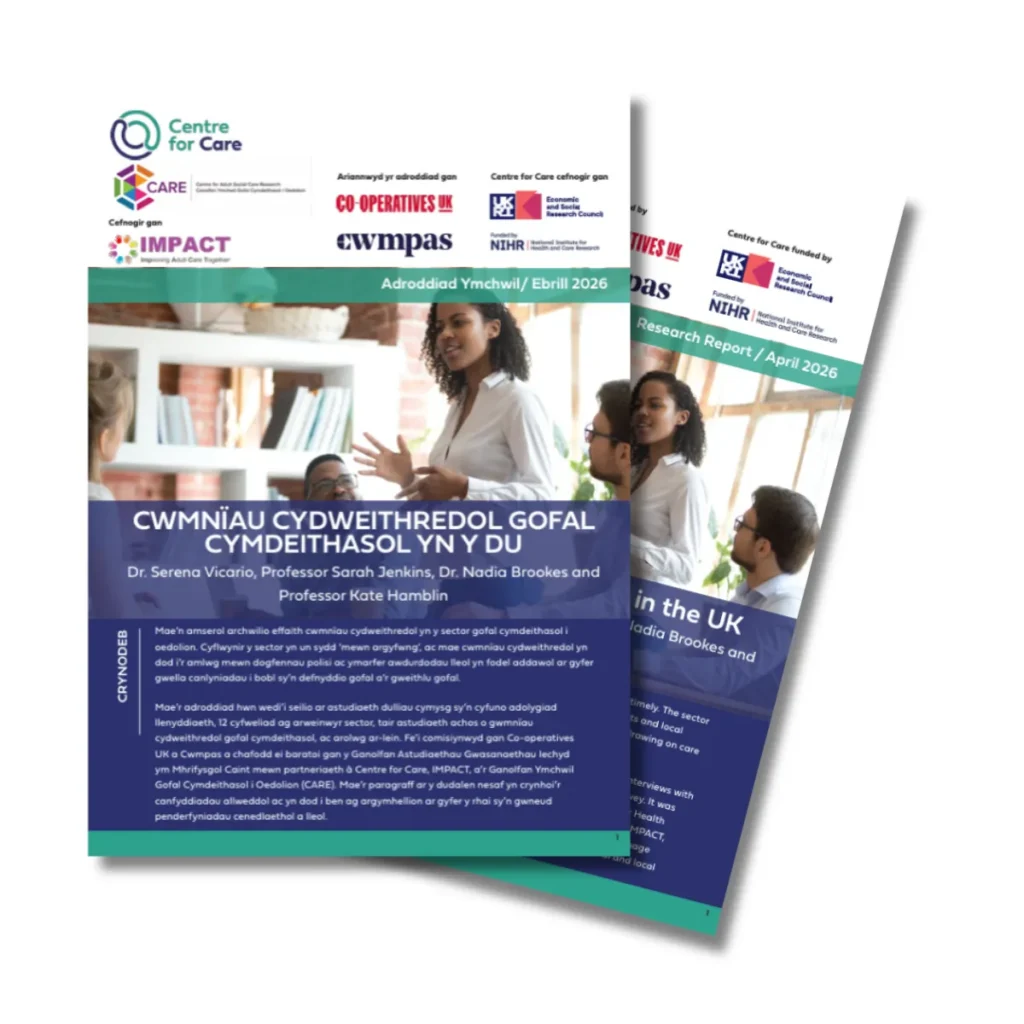
However, as Director of IMPACT, some things are particularly striking – and sometimes for more personal reasons. This month, we were delighted to see the publication of a new study into the role of co-operatives in adult social care, commissioned by Co-operatives UK and Cwmpas and produced by the Centre for Health Services Studies at the University of Kent in partnership with the ESRC Centre for Care, IMPACT and the Centre for Adult Social Care Research (CARE) at Cardiff University.
Since IMPACT started, I’ve been really struck by the focus of so much policy and debate in Wales in particular around co-operatives, social value and finding innovative ways for public money to stay within local communities. Our lead in Wales, Sarah Jenkins, is a sociologist of work and organisations, specialising in things like fair work, gender and employment, emotion work, job quality and care co-operatives – and she’s helped me to understand much more about all these than would ever have been possible by myself.
The report itself is the work (and an achievement) of others – but it includes the case study of Friends United Together, a group of people with learning disabilities in Swansea who pooled their direct payments to form their own user-led co-operative and to control their own care and support. This was part of one of our very first IMPACT ‘Networks’, with groups across the UK focusing on different ways of achieving greater choice and control, through mechanisms like individual service funds, managed budgets and co-operatives. We’re still working on all these issues long after the initial project – not least in the work we’re doing with ARC Northern Ireland, the Department of Health and the five Trusts around making managed budgets more of a reality.
In particular, we worked with the Friends to help them make their own film, to tell the story of their own innovation their way – and to show others what’s possible when the right people come together to think through different ways of doing things. Like so many of the best ideas, the solution they came up with is simple but profound, and it shows what happens when people take control of their own lives and genuine innovation can flourish.
However, this wasn’t just one of our early projects – there was also a more personal connection.
Twenty years ago, I was researching and writing about the struggle for independent living and direct payments. Some people were nervous that people doing things more individually would be more expensive than doing some things in a group setting, and that this would make a number of existing social care services unviable (especially for people who wanted to continue to access the group-based service). Working with a colleague from Co-ops UK, I wrote a very small piece in Community Care magazine, suggesting that this tendency to assume that people either had to do everything on their own or do almost everything collectively was too simplistic. We all want to do some things by ourselves and some things with others – so it’s a case of ‘both/and’ rather than ‘either/or.’ To show how this could work, we suggested scope for people to pool elements of their direct payments and to form user-led co-operatives, for people receiving direct payments to get support from staff-owned co-operatives, and for people, staff and communities to work together in ‘multi-stakeholder’ co-operatives.
I don’t know how many people ever read the article – but it was amazing to come into contact with the Friends all these years later, and to see them making real what I’d only been able to write about hypothetically.
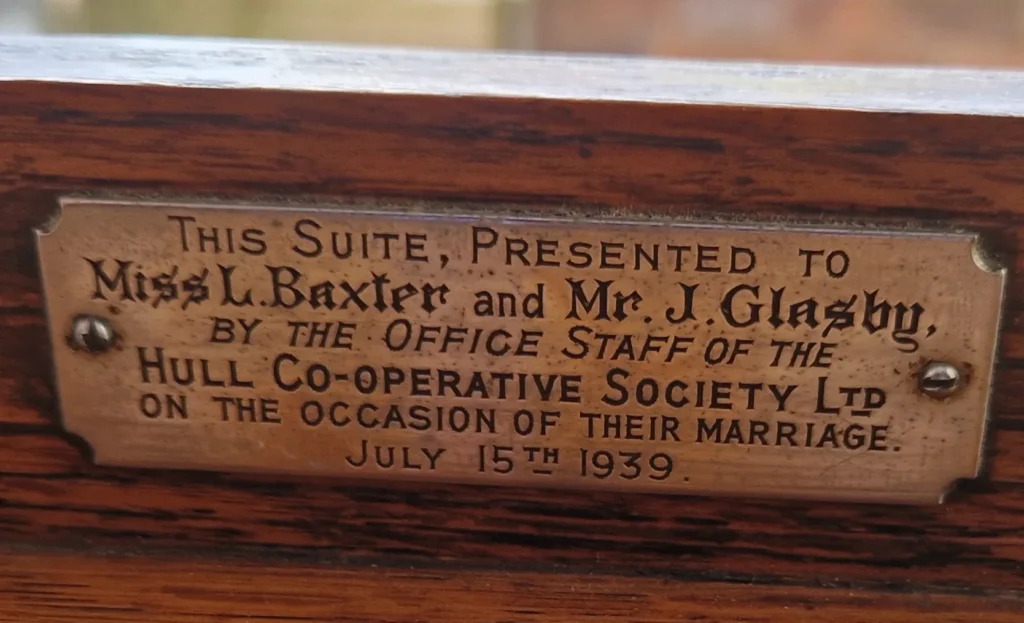
Looking back I wonder if I’d been influenced to write this short piece because of the role the co-op movement had played in the life of my grandparents. They’d met through the local co-op society, they worked for it and supported it throughout their lives, and it was a key part of what we’d now call their ‘social mobility’. Certainly our family life is very different from it would otherwise have been. To this day, I’ve got a beautiful sideboard at home which they were given in 1939 by the Hull Co-operative Society to celebrate their wedding – and I guess it can’t have been an accident when I was reaching for an example of a more innovative way of designing care and support that was somewhere in between the individual and the group, I happened on co-ops.
Anyway – forgive me for indulging in so much family history, but please read the co-ops report, please watch the Friends tell their story – and there’s more on the IMPACT website about all our work on voice, choice and control.