IMPACT Network’s project officer Cate Goodlad reflects on an event held by Springbank Nursing Home as part of their Network action plan.
IMPACT Project Officer, Dr Cate Goodlad, visited Springbank Nursing Home on Friday 22 August 2025 to see first-hand the work they have been doing to enhance their care service, following their involvement with the 2023/4 IMPACT Network on Care Homes, Relationships and Communities. The purpose of the network was to explore ways that care home residents can be helped to develop and maintain relationships with and within their communities. During the Network, participants reflected that COVID-19 had encouraged cooperation and for this reason, care homes in the Stoke-on-Trent area are collaborating and not competing.
Providers are taking a joint approach to activities and wellbeing, including mapping practice and facilities to organise joint activities. They said: “the idea of competition is dying, but the idea of people’s wellbeing is thriving”. The core value of this collaboration is “Sharing is Caring”, as despite being from different care providers, the goal of members of this Network is to provide quality care to the people they care for.


Community at the Heart
Through their involvement in the Network, Springbank developed an action plan to help them achieve this objective which focussed on a greater personalisation of care, professionalisation of staff and increased collaboration. Here are Cate’s reflections on the day.
On a warm sunny morning at the end of August, I made my way across the Derbyshire countryside to be greeted by an equally warm welcome at Springbank Nursing Home in Staffordshire. From the start of my visit it was clear that there was a community focus to the home that extended beyond its physical walls. This was affirmed by the Manager, Lyn, who said that “they want residents to feel part of the community, not just a community within the home”. Today, the home was visited by the Mayor, but also several family members who volunteer to help with activities, or come to have lunch with their relatives.
The home has strong links with local schools with pupils creating art work which adorns the walls, but Springbank residents also regularly go out to community activities. These include coffee mornings, bring and buy sales, the local pub (which opens early for them for a social drink and darts), craft groups, a walking club, and local churches. In conjunction with the local Methodist church and other care facilities in the area they have established a dementia choir which was set up in conjunction with the local Methodist church and other care facilities in the area. This is held in a local church hall, where the lay preacher leads the singing. Friendships have been maintained and made, but additionally this has prompted the creation of a carers group to support the unpaid carers of care home residents.
Valuing Residents and Staff
Staff at Springbank focus on developing relationships with residents to understand more about the person and how they can help them to live fulfilled lives. With many residents living with dementia, they want “to see beyond the diagnosis to see the person”. For example, one resident who loves Northern Soul music and is being helped to attend a forthcoming Northern Soul concert; and a resident who loves to knit is supported to make and sell children’s jumpers. They have a therapy room where residents can access massages or have their nails done, and a hair dressing salon. They prioritise End-of-Life residents with a Purple Bell flower scheme, which creates a calming space for residents in their final days and provides support to loved ones.
Staff at the home told me that they felt valued and encouraged to develop professionally. Contrary to the idea of care work being unskilled, the home encourages and supports staff to study. One person, Sarah, has recently qualified as a nurse; additionally, Claire started working at the home 14 years ago as a receptionist, but is now a nurse associate who is undertaking nurse training. The main gain from this approach to supporting staff is the increase in confidence with Claire commenting: “never in a million years did I think I would be here doing nurse training when I started as a receptionist”.
Collaboration Across Care Homes
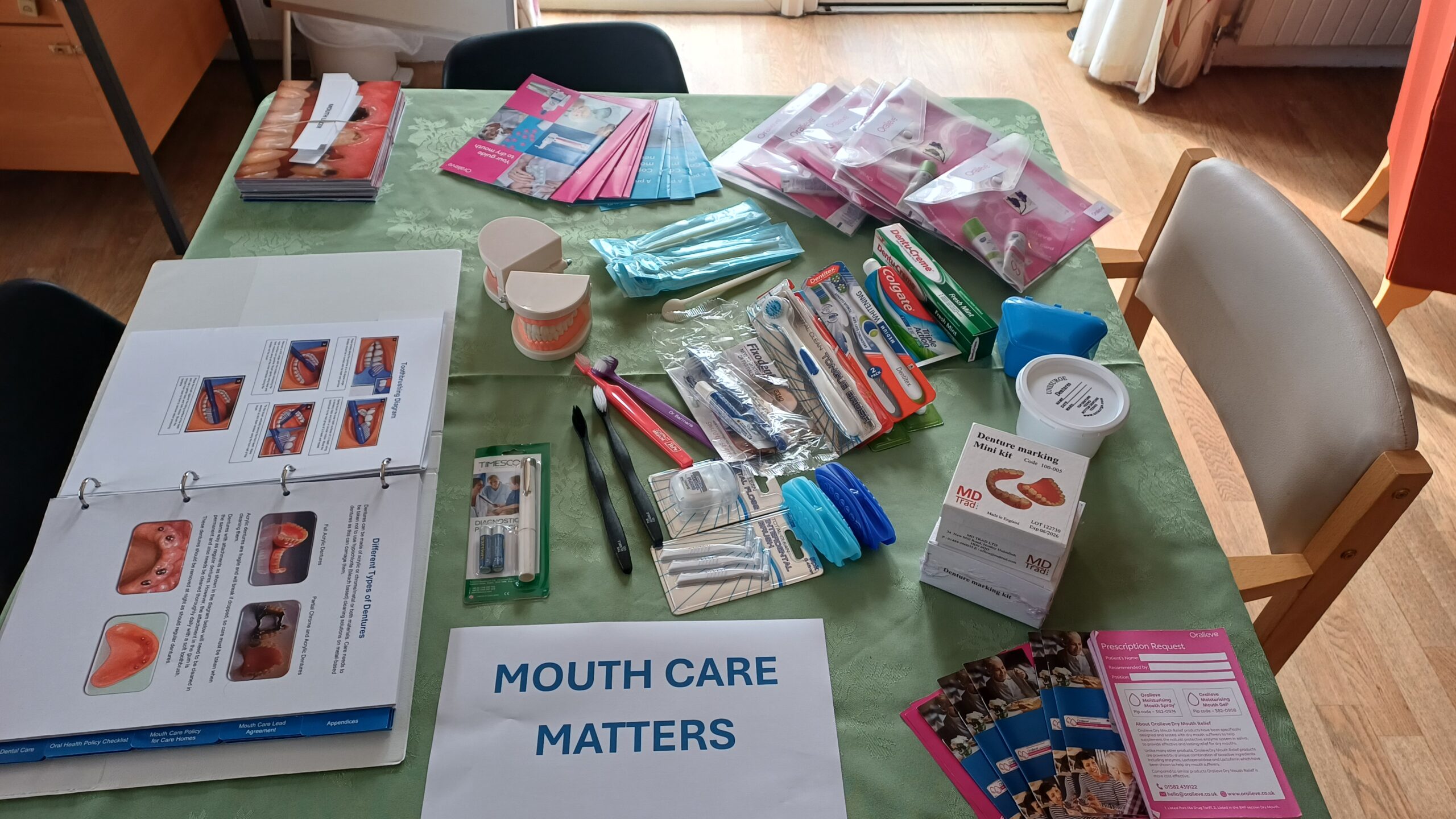
One aspect of the work at Springbank which stands out is the degree of collaboration with other care homes, who would traditionally be seen as competition. During my visit, there was a workshop to share good practice with other local care homes. This included sharing tips for encouraging good oral hygiene and basic first aid which was refresher training and confidence building for Springbank staff, but also prompted discussion and sharing of useful tips with the visitors.
During discussions, it was discovered that one of the visitors was a trained meditation guide who offered to provide mindfulness training to support good mental health to Springbank staff, and in return Claire offered to train their staff in basic first aid. This reciprocal approach to training and being able to draw on the skills and expertise of staff is contributing to development of the care services in both locations. The manager, Lyn, told me that “while we might be in competition commercially, we are all here for the residents to give them a better life”.
But Springbank are not stopping there; they have many plans to continue to develop their practice and share their expertise. Claire told me that during her nurse training it had become clear that the university course didn’t pay much attention to adult social care and she found this frustrating: “it’s not all about the NHS!”.
In the future, she would like to work with the University and the hospital to develop the training programme for nurses to include aspects of social care, such as how to communicate more effectively with dementia patients. With the evident passion for improving their service, here at IMPACT we will look forward to hearing more about the progress they make. Watch this space!