
Direct Payments in 2022

We asked Marie Dunnion, our Facilitator in England, to reflect on 2022. Marie’s Facilitator takes place in Leicester and aims to identify the experiences of direct payments in black and minority ethnic communities.

IMPACT Facilitators work within a local organisation, leading an evidence-informed change project. Through close collaboration, facilitators review the evidence, lead local change and evaluate the effectiveness of the changes that take place. Successful findings and outcomes will then be shared with others for replication across the social care sector.

The Direct Payments Landscape

It feels almost unbelievable that 2022 is drawing to a close, as that means I have been an IMPACT Facilitator at Leicester City Council for almost six months! It seems a good half-way point to pause and reflect on what has been achieved in the first six months and what I wish to achieve over the remaining six months, with the project due for completion in June 2023.

I have become well-versed with the academic side of the project topic, especially as my project uniquely incorporates an academic literature review conducted by the wider IMPACT team. On the other hand, I have also been working hard to embed myself in the working life and culture of Leicester City Council, with an obvious focus on direct payments and learning about the various systems and processes in place. The Facilitator model has made it possible for me to function as a member of Leicester City Council staff, accessing the people and information necessary for me to understand the current direct payments landscape at Leicester City Council.

The Facilitator role has allowed me to explore the experiences of direct payments in Black and Minority Ethnic (BAME) communities, which is crucially what lies at the heart of my project. The highlight of my work has been speaking to people in Leicester’s BAME communities, actively listening to their stories of how direct payments are working for them and/or how the process could be improved. One challenge I have encountered has been finding people to speak to, which reflects the difficulty that Leicester City Council has experienced in obtaining feedback on Direct Payments from BAME communities. However, from those I have spoken to, a lot of what they have said corresponds to the academic literature; for example, they enjoy the improved control and flexibility that direct payments allow them to have over their own care package. This might include hiring a Personal Assistant (PA) who is a friend or family member or selecting a PA who they feel aligns with their ethnic, cultural, and religious values.

Looking Ahead

In 2023, I hope to further explore PA recruitment, especially as Leicester City Council have just launched a PA database, which will include comprehensive information about PAs, for example what languages they speak (relating to peoples’ cultural needs). As the literature has identified a gap in knowledge from the perspective of the PA’s experience, my aspirations are extending towards speaking to PAs where possible. I have also been made aware that some people in BAME communities simply do not know about direct payments, so it would be good to know why this may be and how awareness could be raised.

Since the beginning of my project, I have felt that ‘being successful’ by the end of my time with Leicester City Council will take the form of a collective account of direct payments, comprised of experiences from lots of different BAME communities and representing various areas of adult social care. To achieve this, I will continue to listen to peoples’ stories, such as the one Hashim Duale MBE told me when speaking of the Somali community as an oral society, and sharing the advice, “Give people information in the way that they can best digest that information.” He surprised me with the concept of talking leaflets in audio format – a simple but effective alternative to written materials. This is just one example of how peoples’ stories can be used to inform new practices within Leicester City Council; I’m looking forward to seeing how this and other evidence is implemented over time.


Asset-based approaches in 2022

Magnifying glass and a man writing in a piece of paper - showing different asset-based approaches

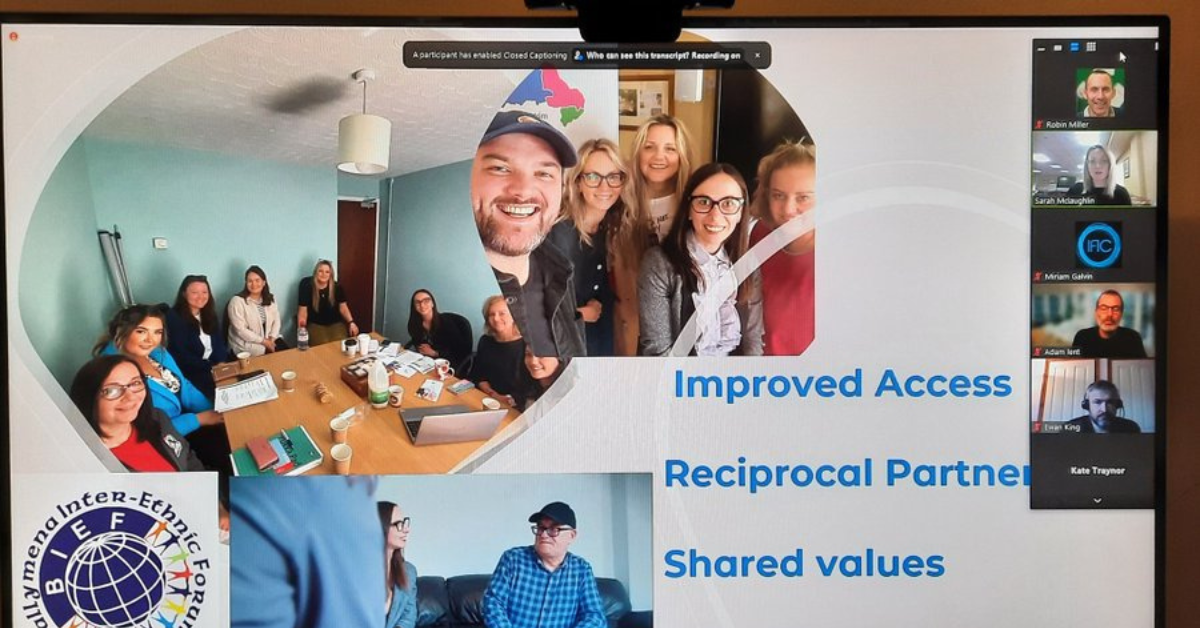
We asked Robin Miller, IMPACT Demonstrators Lead, and Sarah McLoughlin, our Strategic Improvement Coach, to reflect on 2022 and the Demonstrator project so far. Our Demonstrator is taking place in Northern Ireland, and is looking at ‘asset-based approaches’, and how older people can have a better life via health and social services working in new ways with them, the community, and the voluntary sector.

What have been your wins/highlights of 2022?

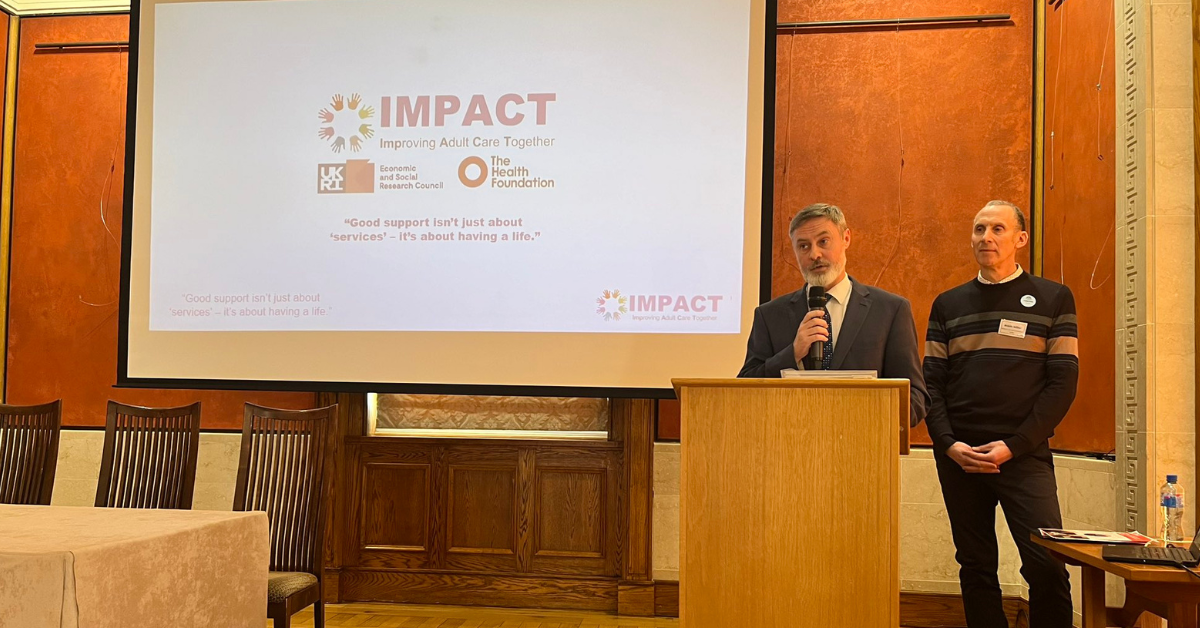
The potential value that can be generated through IMPACT partnering with an innovative local area to learn from their experiences and support them to build on their strengths. Mid & East Antrim has been a great place for the Demonstrator model to be piloted due to MEAAP’s established networks with older people and with policy and practice partners. Our World Café stakeholder event was an excellent reflection of this – 50 people with lived experience and/or professionals coming together to discuss, debate and design.

How have your aspirations for the project/IMPACT changed?

The overall aspirations for the project – understanding how to engage all of the relevant stakeholders in a local area with innovation, identifying what the important elements of an asset-based approach in primary and social care – remain the same. Through the gathering of lived, practice and research evidence the opportunities to support improvement have become clearer though, for example in relation to responding to the different expectations of diverse communities and demonstrating to professionals how the approach can save them time as well as benefit older people and their families.

What have you learned so far?

When planning future Demonstrators, it will be important that there is a good level of commitment from across the social and health care system, and a local organisation who is well connected and willing to lead on the process in this area.

There are relatively few people with all the knowledge and skills necessary to undertake a strategic improvement role in social care – therefore part of the role of IMPACT needs to be on workforce development and building a cadre of people with these skills.

What are your hopes for next year?

Apart from the very practical hope that our second Improvement Coach is appointed, we want to take forward the actions that are set out in the theory of change regarding increasing the spread and further strengthening the depth of this asset-based approach. We would also hope for policy makers in Northern Ireland to learn from our experience in Mid and East Antrim as they develop the integrated care system.

What’s unique about your ‘asset-based approaches’ project?

The strength of connection with older people in the local area, the high level of commitment from stakeholders, and the capacity building activities with the voluntary and community sector.

Any highlights, stories, or surprises you’d like to share?

The World Café event we ran in November, and feedback from older people and wider stakeholders is a great example of the project’s impact to date.

Find out more about the Demonstrator project.

Demonstrator is officially live

In this blog, IMPACT’s Robin Miller and Sarah McLaughlin celebrate the set up of the first IMPACT Demonstrator

We’re mid-way through our Establishment phase, and deep in the middle of setting up our initial pilot projects to test our four delivery models. We are delighted to share that our first IMPACT Demonstrator has been set up.

Demonstrator background

This Demonstrator will be based in Mid & East Antrim, where a successful asset-based project is already in place. IMPACTAgewell® was introduced in 2017 by the Mid & East Antrim Agewell Partnership (MEAAP) in partnership with local health and social care organisations through funding from the Dunhill Medical Trust (a member of the IMPACT consortium). Its innovative model includes linking people to community resources, multi-disciplinary locality hubs to bring together professionals in a locality on a regular basis and ‘funded’ social prescriptions which enable resources to flow to voluntary and community organisations.

IMPACT Demonstrators will explore how we can use evidence to address major strategic issues for adult social care. Improvement ‘coaches’, including people with lived and/or practice experience) will work in local services to facilitate an evidence-informed change, support evaluation and work with national policy and practice to embed any lessons learned.

Asset-based approaches

The first Demonstrator will be focused on ‘asset-based approaches’ and in particular how older people can have a better life via health and social services working in new ways with them and with the community and voluntary sector.

As well as learning from their success to date, the Demonstrator will work with IMPACTAgewell® to ensure that this approach is available to all older people in the local area. At present most, but not all, general practices participate, and therefore some older people are not able to benefit from the opportunity. Partial implementation is a common issue when introducing an innovation. The local community and voluntary-led partnership would like to examine how the engagement process can develop, and how they can encourage and support the engagement of all the services and professionals in the area. Doing so could ultimately lead to the scale and spread of the model to other areas.

Sarah has been appointed as the first improvement coach and the second post will shortly be advertised by the University of Ulster – we will share vacancies when they are made live. We will update our project page with updates from Robin, Sarah and the MEAAP team.