
Increasing engagement with research by occupational therapists in West Midlands adult social care services
Project Summary
The project aims to enhance research engagement and capacity among occupational therapists (OTs) working in adult social care across the West Midlands.
There are around 200 occupational therapists employed across 14 local authorities in the West Midlands, specialising in interventions that help prevent health inequalities and reduce the need for long-term care. Early evidence review findings indicate that adult social care occupational therapists have limited opportunities to use or contribute to research and develop the evidence base for their work. The project is collaborating with key stakeholders, including people who draw on care and support, to explore ways to improve evidence-based practice and actively support occupational therapists in research participation. The aims are to:
The project is focusing on careers, culture and capacity, and working with occupational therapists, people that have experienced/engaged with OT services and partners to achieve the aims.
IMPACT Factfile
- Year: 2024 – 2025
- Delivery Model: Demonstrator
- Four Nations: England
Resources: - Final report (Word)
Early progress
- Connected with Royal College of Occupational Therapists and the Elizabeth Casson Trust
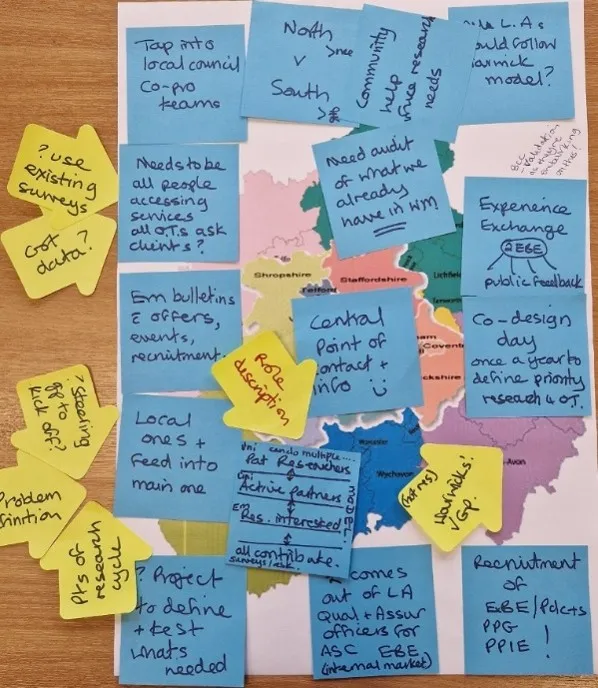
- Initial work undertaken to define and refine potential improvement activities.
- Online workshops, or hack events to provide opportunities for research related activities
- Meeting with participatory groups & recruiting a bespoke team of co-creatives.
- Surveying occupational therapists to identify priorities, challenges and needs
- A conference is planned for Feb 2026 to showcase the occupational therapists’ work
Engagement findings
The project began by gathering evidence from occupational therapists across the region, reviewing existing workforce intelligence data and working closely with an Experts by Experience advisory group, who had experience of occupational therapy adult social care services over a prolonged period.
The Demonstrator team reviewed local data and national data sets from Skills for Care to establish a baseline, while focusing more heavily on local knowledge, findings were supplemented by individual and group conversations across the project.
What we heard
Occupational therapists told us they were interested in research but often lacked:
- Time and protected space to engage
- Organisational support and leadership encouragement
- Confidence in undertaking research activities
- Clear opportunities to participate
- Access to one-to-one support, mentoring, networks and practical guidance
- Despite these identified barriers to engaging with research, Occupational therapists largely expressed a positive attitude towards the culture of research; an intrinsic motivation and professional curiosity to participate was clearly identified, providing a fertile ground for future engagement if barriers are addressed
Despite these identified barriers to engaging with research, occupational therapists largely expressed a positive attitude towards the culture of research; an intrinsic motivation and professional curiosity to participate was clearly identified, providing a fertile ground for future engagement if barriers are addressed.
Testing new approaches
The team undertook a six-month period of test and learn activities which resulted in four interactive ‘Hack’ events that were delivered to explore what helps occupational therapists engage with research. At the sessions the advisory group convened to co-create the programme of work for the Demonstrator and specifically used their lived experience to create film for the OT Show and conference (a national trade event), where they actively contributed to discussions and panel conversations with colleagues.
The purpose for each hack was:
- To test and learn – what works/does not to improve engagement with research
- To use the research circle to structure activities in bite-size formats, in person
- To support open and honest conversation about the barriers and enablers
- To ensure EbE voice is heard and central
- To support prioritisation of effort to address core problems
- Capture improvement ideas
The sessions focused on:
- Developing and pitching research ideas
- Building confidence in academic and professional writing
- Working with partners and co-designing research
- Planning future research and professional development pathways
Throughout the programme, participants heard from experienced researchers, shared ideas, practised new skills and contributed to the development of a regional theory of change. Feedback from attendees was consistently positive, with participants describing the sessions as inspiring, practical and valuable in helping them see research as something achievable and relevant to practice.
Showcase Event
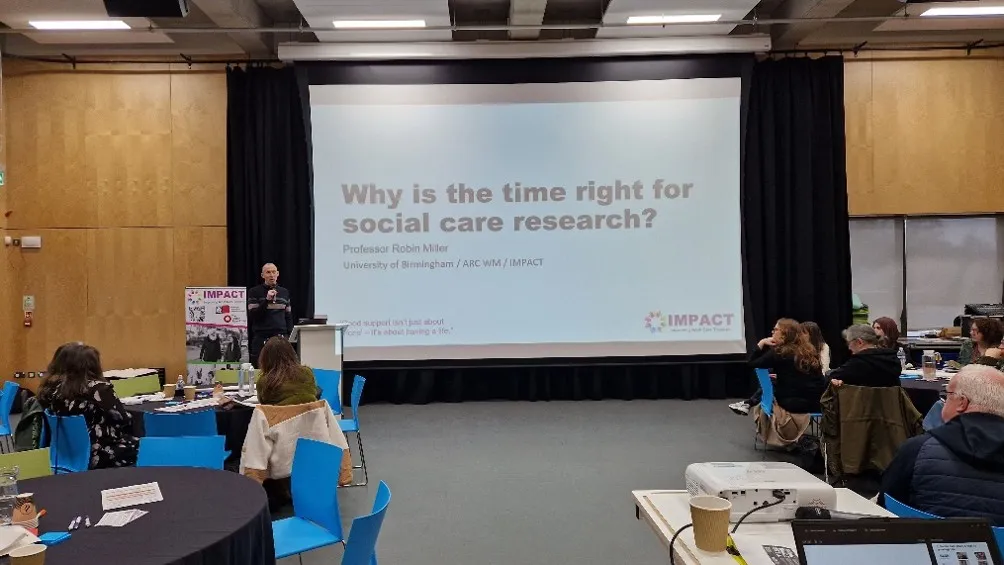
In February 2026, the project culminated in the Adult Social Care Occupational Therapy Showcase in Birmingham.
The event brought together:
- Occupational therapists from across the Midlands
- Experts by Experience
- Local authority colleagues
- Research and improvement partners
- National organisations, including RCOT and the Elizabeth Casson Trust
55 people attended to celebrate good practice, share learning and explore future opportunities for research engagement. The event featured practitioner presentations, posters, networking opportunities and further development of the project’s theory of change.
Participants highlighted that:
- “Research is not just for academics.”
- “It has inspired me.”
- “There is a lot of good stuff happening across the region but we’re not hearing about it.”
Outcomes and Learning
The project demonstrated that adult social care occupational therapists are interested in research and want to strengthen their skills and involvement.
Key learning included
- Research engagement is limited more by structural and organisational barriers than by lack of interest
- Professional leadership, protected time and accessible support are critical enablers
- Opportunities to learn alongside peers help build confidence and motivation
- Better access to evidence, library services and research infrastructure is needed within adult social care
- Further work is needed within many local authorities to develop a culture to support evidence-based practice and for this to be a priority within services
- There is a need for equitable access to published evidence, access to libraries and library support
- People with lived experience can play a central role in shaping research and improvement activity
The project also produced a new theory of change to support future work and developed a proposed regional Experts by Experience model that could support occupational therapy research and improvement activity across the West Midlands.
Next Steps
Building on the learning from the Demonstrator, several activities are already underway, including:
- Continued coaching an mentoring support through IMPACT
- Recruitment of a research-focused occupational therapy facilitator
- Piloting Critically Appraised Topic (CAT) groups to build evidence appraisal skills
- Sharing learning through regional, national and international conferences
- Developing a policy briefing and wider dissemination activity
- Exploring how successful approaches can be embedded and scaled across the region
The long-term ambition is to create a research-active occupational therapy community that supports professional development, strengthens evidence-informed practice and improves outcomes for people accessing adult social care services.
Meet Our Demonstrators: Alicia Ridout & Jane Clark

Alicia Ridout
Alicia has been working with IMPACT for almost 2 years, leading a Demonstrator in Leeds and a Tech Network. She has just completed a Delegated Healthcare Activities project, funded by RCOT Innovation Seed fund, to support occupational therapy practice development in adult social care.

Jane Clark
With responsibility for the development of recovery focused services and participation she has extensive experience of working alongside people with lived experience. Jane was a key member of the Birmingham & Solihull Allied Health Professionals council and played a key part in the development of the system wide AHP Strategy.