Improving staff awareness of the experiences of people with acquired brain injury and their families through co-produced training
Project Background
Our Facilitator project with Brain Injury Matters NI (BIM) will enhance the understanding and awareness of the importance of hope and how recovery is a long-term journey that continues well beyond the initial rehabilitation people with acquired brain injury receive.
The project will work with people who use BIM services and their family members to identify the key messages of what helps in their recovery and everyday lives; and coproduce training material to convey these messages for health and social care staff who may work with them. By fostering co-production and collaboration, the project aims to create a cultural shift, ensuring services are more inclusive, respectful, and responsive. BIM seeks to build long-term partnerships with health and social care trusts, embedding continuous improvement and real-world insights into training. This project is based in Belfast, Northern Ireland.
IMPACT Factfile
- Year: 2025 – 2026
- Delivery Model: Facilitator
- Four Nations: Northern Ireland
- Themes:
- Resources:
Project Updates
The Wishing Tree at Brain Injury Matters
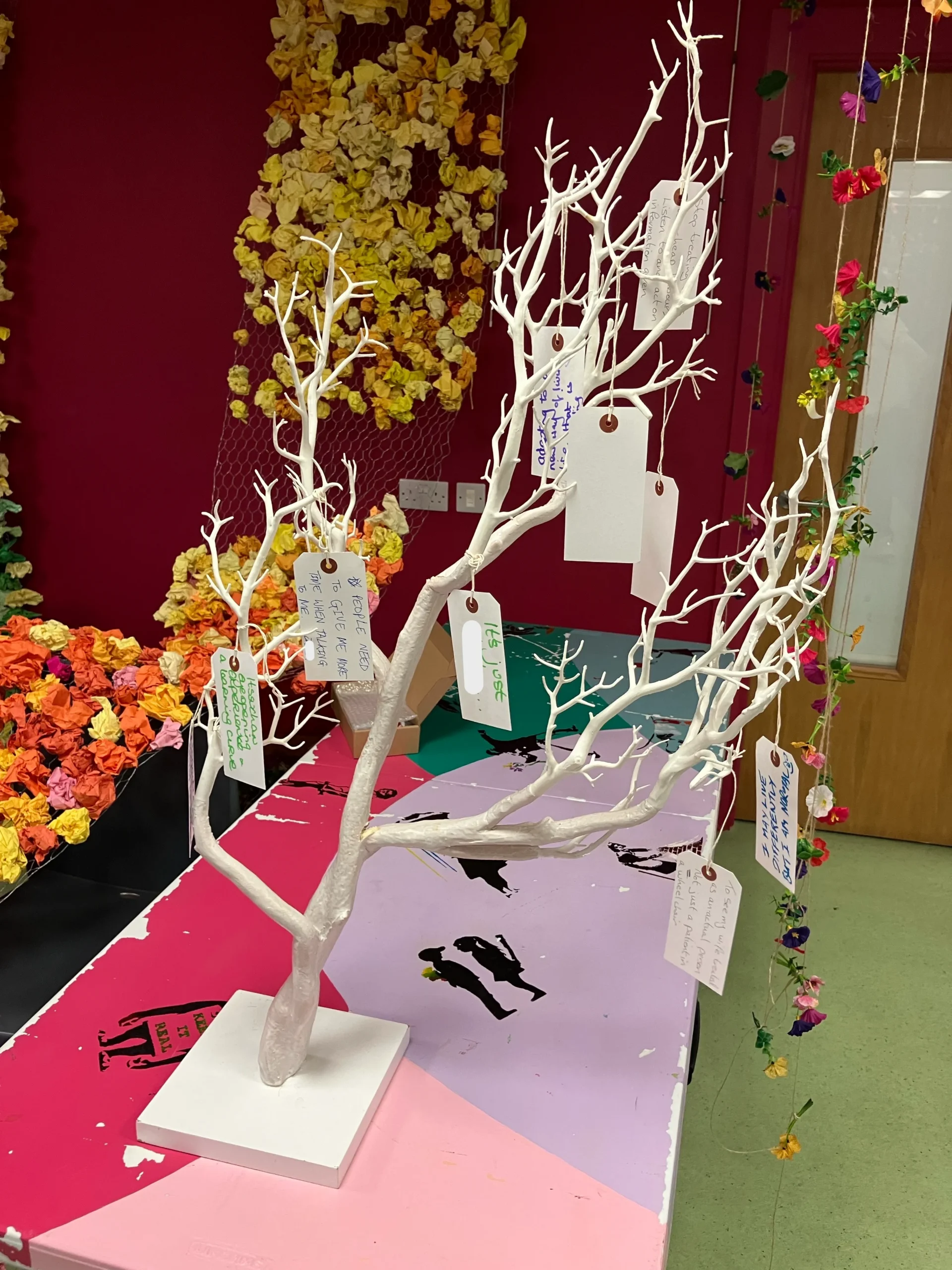
The Wishing Tree is a tradition used across cultures where people write their wishes on pieces of paper, ribbon or cloth and hang them on tree branches with the hopes that they will come true. The practice has since been adapted and is used as a participatory tool with groups to share their ideas and experiences. The activity benefits from inviting people to write their views, thus capturing quieter voices.
In December 2025, as part of the IMPACT Facilitator’s project hosted by Brain Injury Matters, 13 people with acquired brain injuries and two carers took part in Wishing Tree workshops where they responded to the prompt, ‘what do you want people to understand about living with a brain injury?’. Participants wrote their ideas on paper luggage tags and hung them on a model tree. Responses centred around several key themes. For example, the importance of treating people who have an acquired brain injury with dignity, care and respect. One tag that exemplifies this theme read: ‘Life is hard. I’m still a human being. Don’t push me out. Include me’. The tags offer a poignant distillation of lived experiences.
The Wishing Tree workshops will inform the next phase of coproduction at Brain Injury Matters; a six-week series of discussions where participants will reflect on their experiences of hospital discharge and life at home following their brain injury. Themes from these sessions will feed into the development of training for health and social care staff in Northern Ireland.
Meet Our Facilitator: Bekkah Bernheim
