Our vision for adult social care in Scotland
Adult social care contributes an estimated £5 billion in value to Scotland’s economy. Social care is part of daily life for an estimated 1 in 23 people in Scotland. At IMPACT, we believe that ‘good support isn’t just about services – it’s about having a life.’ We know how we talk about social care matters. When social care is framed only as a financial pressure or a system in crisis, we limit what people imagine is possible. Presenting social care as achievable, desirable, and beneficial helps citizens see that better care strengthens society for everyone – not just for those who currently need support. However, providing a hopeful narrative doesn’t mean shying away from the challenges.
Today, people in Scotland are waiting too long to access social care and many people are living with unmet need and lost potential. With partnerships and local authorities across Scotland facing significant financial pressures, it is now more important than ever for the newly elected Scottish Government and local authorities to invest in social care – and to ensure that every pound is spent in an evidence-based way, drawing on the strengths and experience of people who access support.
Scotland has a diverse social care delivery landscape, with urban, rural, remote and island communities. Lived experience, practitioner insights and research offer vital evidence of what works in social care, grounded in the everyday realities of people’s lives in Scotland. Evidence has a critical role in shaping ongoing reform and improvement across social care, and in an integrated system, we can do more to collect, interpret and utilise big data across social care. We call on the new government to draw on the evidence of what works to inform election debate and policy agenda and champion consistent, connected and purposeful use of evidence.
Download the full briefing here (Word version here), or read our recommendations below.
Invest in voice, choice and control
People who access social care have essential insight into what truly works, what matters, and what needs to change across the system. While we use the language of co-production nationally and locally, the reality is that this is not the status quo across Scotland.
Scotland has a strong legislative framework to enable choice and control through Self-directed Support, but there is increasing evidence that access to Self-directed Support may be subject to increasing cuts or restrictions. Our Network on choice and control found that enabling people to control their own supports promotes independence, wellbeing and sense of empowerment. Investing in choice can lead to more flexible and responsive arrangements of support that are better for everyone.
In addition, IMPACT’s Network on people with learning disabilities and autistic people leaving long-stay hospitals identified unacceptably high levels of people with learning disabilities and autism living in long stay hospitals. In September 2025, it was reported that a further 141 people with complex care needs were at risk of support breakdown which may lead to inappropriate hospitalisation. We are proud to have supported the development of the New Routes Home toolkit to enable autistic people and people with learning disabilities and their families to uphold their rights, and access supported decision-making.
We call on the new Scottish Government to elevate the voices of lived experience in decision-making at all levels – in decisions about their own support and across planning, commissioning, delivery and scrutiny of social care.
IMPACT’s work in this space
- IMPACT’s Network on commissioning differently emphasised the need to move away from traditional “time and task” models toward approaches that prioritise wellbeing, social value, and co-production.
- IMPACT’s Network on involving people with lived experience in strategic decision making highlighted the need for independent advocacy, inclusive processes and accountability in shared decision making.
- IMPACT is continuing to support and demonstrate the use of co-production across social care, and it is a central feature of our new Change Model (an evidence-informed model of change in social care).
Invest in the workforce we need, now and in the future
The Scottish Social Services workforce is 214,750 people strong and the largest it has ever been. We know that the social care workforce is capable, skilled and diverse, but our Network on the wellbeing of the care workforce and project on the wellbeing of Personal Assistants found that pay and conditions remain a concern for the social care workforce. People who work in social care are driven by making a difference, and the relationships they have with the people they support, but are facing increasing financial pressures.
We call on the new Scottish government to ensure that all the dimensions of Fair Work are embedded in the design and implementation of social care policy agendas, to ensure that care work is fair, and recognised for its vital contribution to society.
IMPACT’s work in this space
- IMPACT’s Network on values-based recruitment illustrated a step-by-step approach to recruiting social care staff who illustrate the values needed for the role, and are more likely to stay in social care for longer.
- “With the future of social care ever-present in political debate, typically about how it can be ‘fixed’, now more than ever it is imperative to have the right people in the right place.” – Professor Karen Watchman and Dr Kathryn Mackay, University of Stirling, wrote about our project on recruiting more men for the Herald, highlighting the importance of role models and amplifying the voices of men in the adult social care sector.
Invest in prevention – drawing on the strengths of people and communities
We know that spending money on prevention is an economic investment and that continued investment in ethical commissioning practices can deliver on fairer social care regardless of geography. Prevention can also rebalance the focus of social care away from crisis. Our work on addressing loneliness among older adults in Scotland found that place-based, community-led interventions can be a powerful, and efficient source of support.
Carers have a central role in enabling prevention, helping keep people well at home and contributing to the scaffolding that supports Scotland’s paid social care sector. Approximately 716,250 people in Scotland provide unpaid care. We know that unpaid carers make significant contributions to Scotland’s social care sector, but remain unseen and undervalued with poorer outcomes across employment, education, housing, poverty and social contact.
We call on the new Government to invest in prevention – helping people to live independently, participate in their communities, and avoid costly crisis interventions. It is vital that the Care Reform (Scotland) Act is effectively resourced and implemented in order to achieve its aims to recognise, respect and support unpaid carers .
IMPACT’s work in this space
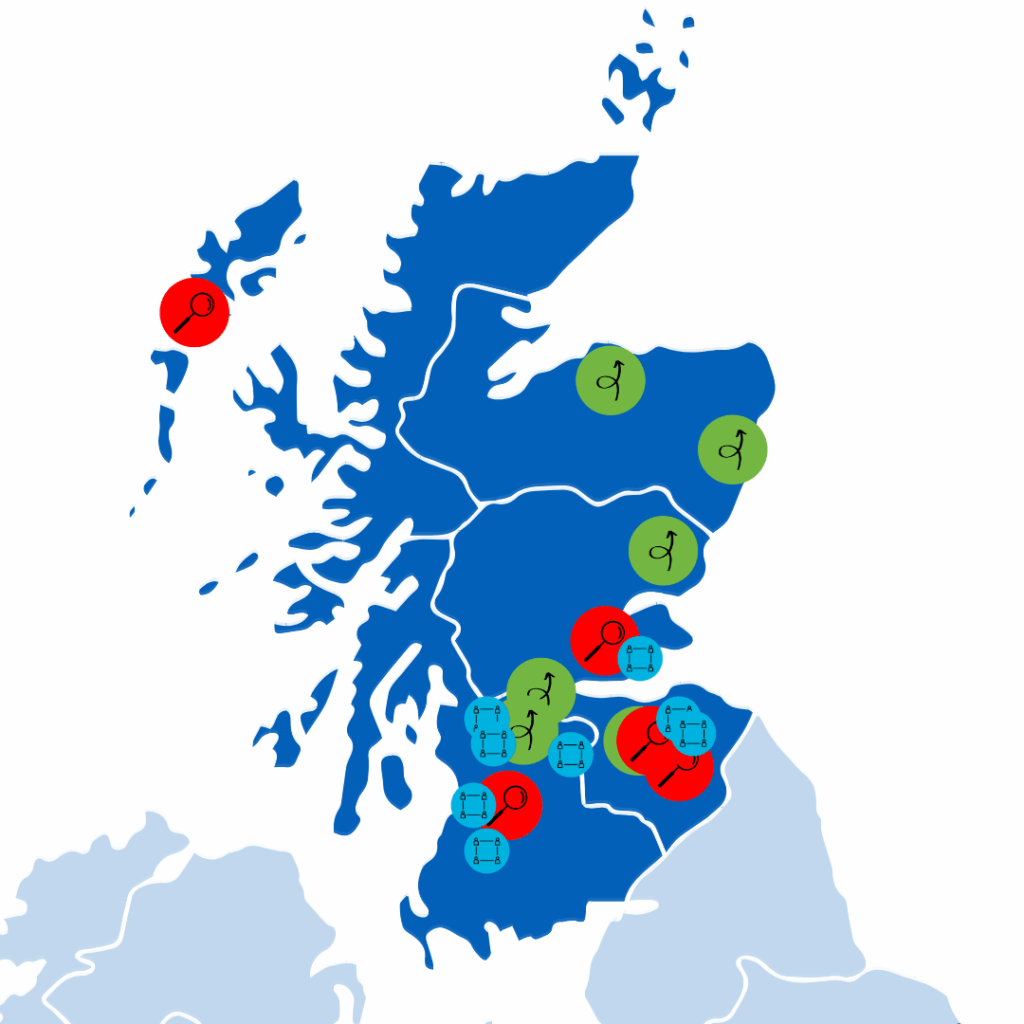
- IMPACT’s project in Fife on care leavers transitions to adulthood illustrated novel approaches to prevention for care leavers, shaped by young people and care experienced adults.
- IMPACT’s project on implementing technology in a care at-home service noted that personalisation, quality assurance and consistency were vital to the ongoing use of technology in care.
- IMPACT’s Network on carers, transition and co-production brought together evidence on how transitions in people’s care (for example between hospital and home) could better include unpaid carers to reflect their central role in keeping people well at home.
- IMPACT’s ongoing project in the Western Isles focuses on enabling people at risk of or living with frailty to Age Well.
Background
Our Scotland team is based at the University of Stirling and is dedicated to using evidence – from research, practice and lived experience – to make a difference to Scotland’s social care.
We want to build lasting connections with Scotland’s vibrant social care sector. There are various ways to connect with IMPACT and our partners, including our biannual Scottish IMPACT Assemblies, targeted events for practitioners, researchers and people with lived experience, and through our ongoing project work.
To find out more, you can visit the IMPACT website below, or email Rhiann McLean [[email protected]], our National Embedding Lead in Scotland.