
Improving staff retention in adult social care
Project Background
Investing in the workforce is crucial for the provision of high-quality care and support.
With sector-wide retention rates at around 24%, this project is focusing on strategies and resources to help retain those experienced, skilled and valued staff, reducing expenditure on recruitment and improving outcomes for people receiving services. The project is hosted by Ategi in Pontypridd, Wales and aims to highlight what affects retention, positively or negatively, in adult social care. This is considered from three perspectives: people supported at Ategi, current and former staff, and social care students about to join the profession.
IMPACT Factfile
- Year: 2025 – 2026
- Delivery Model: Facilitator
- Four Nations: Wales
- Themes:
- Resources:
Project Activities
1. Discussions and workshops with Ategi Staff members
Between September 2025 and January 2026, Celia Netana, the project Facilitator, held two rounds of one-to-one discussions and workshops with Ategi staff working in different areas of support provision – Community Care, Supported Living, Shared Lives and Ty Cornel. She also met with staff from admin, finance, HR and the Senior Leadership team, while based at the Ategi Wales Headquarters.
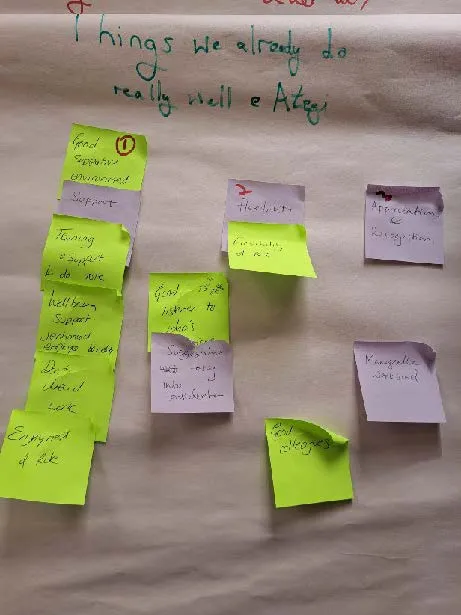
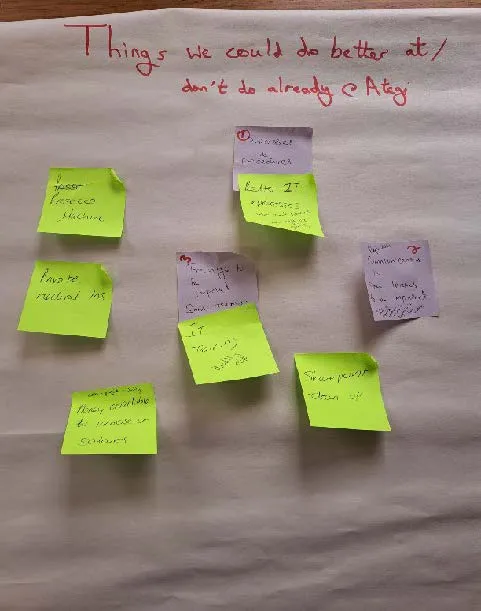
The first round of discussions aimed to understand more about staff members’ experiences and views of what helps keep them in a role and what contributes to their decisions to leave. During the first workshops, staff were asked what they thought Ategi already did well and where they thought improvement could be made. They were then also asked to identify and number what they thought to be the three most important priority areas for improving staff retention.
Celia then gathered all materials and evidence collected from the first round of discussions and workshops and identified key themes from the responses given by staff. Three themes stood out as being important for Ategi staff about what Ategi is already doing well and where there could be improvement.
Theme 1 – Fairness
Having a good work-life balance and having a manageable workload were important to Ategi staff and identified as areas Ategi is already doing well to achieve. Combatting daily frustrations, such as chasing people for the same thing, and adhering to organisation policies, were highlighted by staff as areas where helpful improvements could be made.
| What works well | What is not working so well |
| · Flexibility, work-life balance and being understanding and accommodating during difficult times · Working alongside family and other work commitments · Fair workloads and shift patterns; easy to book annual leave | · ‘Accountability” in abiding by policies (e.g. phoning in sick, processes and paperwork deadlines) · Need more up to date IT and training to use it · Better communication of staff policies would be helpful, e.g. pay scales and claiming expenses |
Theme 2 – Good supportive environment
Having a good supportive working environment was really important to Ategi staff. The need for compassionate and supportive management and feeling that their professional judgement is valued was also identified as being particularly important, in addition to addressing staff burnout.
| What works well | What is not working so well |
| · Empathetic and Supportive Management (despite historic negative experiences) · Good teamwork · Practical, quality training · Acceptable pay compared to other third sector organisations · Good communication across services | · Addressing burnout for support workers and management · Need to build up more of a ‘core’ staff team to cover absences as well as to respond appropriately to day-to-day issues · Improving communication and activities across departments and services to achieve a ‘whole Ategi’ team approach |
Theme 3 -Appreciation and recognition
Staff agreed that pay and benefits were good especially for a third sector organisation and there was recognition of the option of “sideways” progression where you can move across into different roles, learn new skills, and develop your career without having to move into a management role or leave the organisation. One priority for improvement was in providing feedback, where staff wanted to be consulted but with greater anonymity.
| What works well | What is not working so well |
| · Provision of long service vouchers · Being able to buy extra holidays · Person centred and values-based working · Recognition and appreciation of staff as individuals · Opportunities for ‘sideways’ career progression | · Improvements can be made to how staff can provide feedback to ensure honesty and anonymity · Some changes feel ‘top-down’ and staff do not always feel listened to or that their judgements and ideas are always valued · Some procedures feel too generalised and distinct aspects of different services are not always recognised |
The outcomes from the first round of discussions and workshops were shared with all staff who took part and later discussed in a second round of workshops and one-to-one discussions. Ategi staff also proposed what changes they would make to address these priorities during this second round of workshops and discussions.
2. Engaging with Ategi service users and the ‘Ideal Support Worker’ workshop
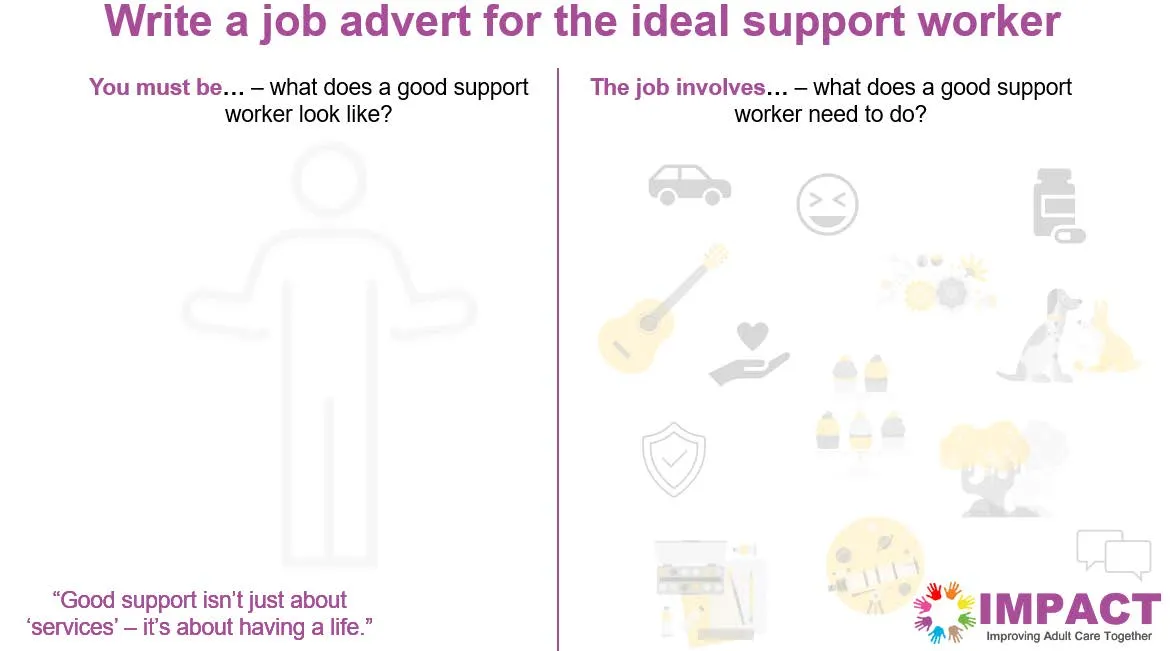
Celia also spoke with Ategi’s service users, referred to by Ategi as “People We Support” (PWS). These discussions aimed at finding out more about the impact of staff retention on people who use Ategi’s services and about what matters most to them about the support they receive. A workshop was held with PWS where they created a job advert for their ideal support worker, specifying what type of person they needed to be and what kind of things they needed to do.

3. Engaging with social care students and tutors from Nant Garw campus, Coleg Y Cymoedd
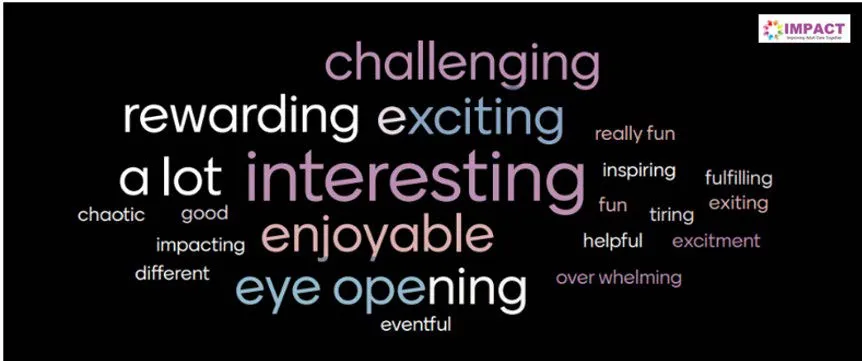
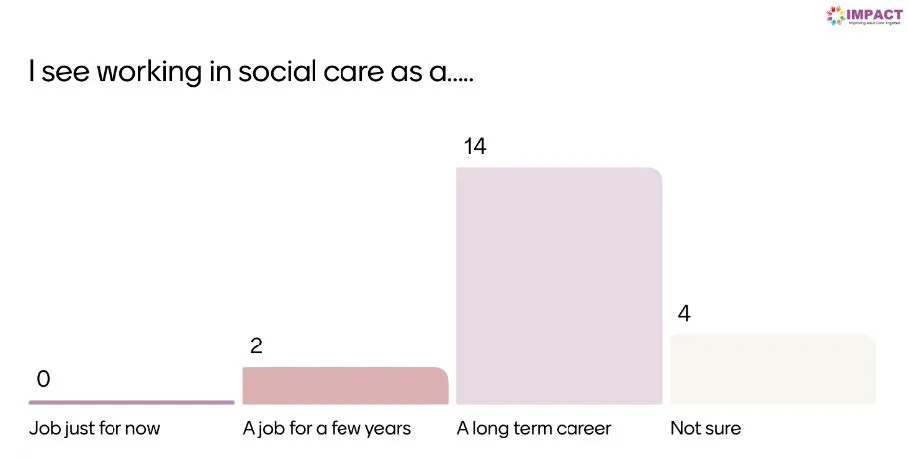
Social care students and tutors from Coleg Y Cymoedd joined Celia and Lynn Longland from Ategi for a workshop where they shared their experiences of working in a social care setting. Twenty-five students between the ages of 17 and 20 kindly shared details of their experiences and future hopes and worries about working in social care. The students had recently completed a 60-hour work placement as part of their course and were asked them to sum up their experiences of this in one word.
Students had a realistic experience recognising that the work was meaningful but challenging at times. It was also highly reassuring to see that most students considered working in social care as a long-term career option.
Meet Our Facilitator: Celia Netana
