Meeting the social care needs of refugees and people seeking asylum
The context
Refugees and people seeking asylum are particularly vulnerable due to the circumstances of forced displacements, such as trauma, violence and persecution. Despite seeking asylum being a human right, evidence shows that refugees and people seeking asylum have limited access to social care services due to entitlements and limited understanding of the UK system. This Network will explore the various social care needs of refugees and asylum seekers in the UK and develop solutions to address them.
IMPACT Factfile
- Year: 2025 – 2026
- Delivery Model: Networks
- Themes:
- Resources
Network members
Networks are meeting across the UK, co-ordinated by:
In England:
Chillypep
Stand as One (SAO)
In Northern Ireland:
Laura Doyle
In Scotland:
Central and West Integration Network (CWIN)
In Wales:
BASW Cymru
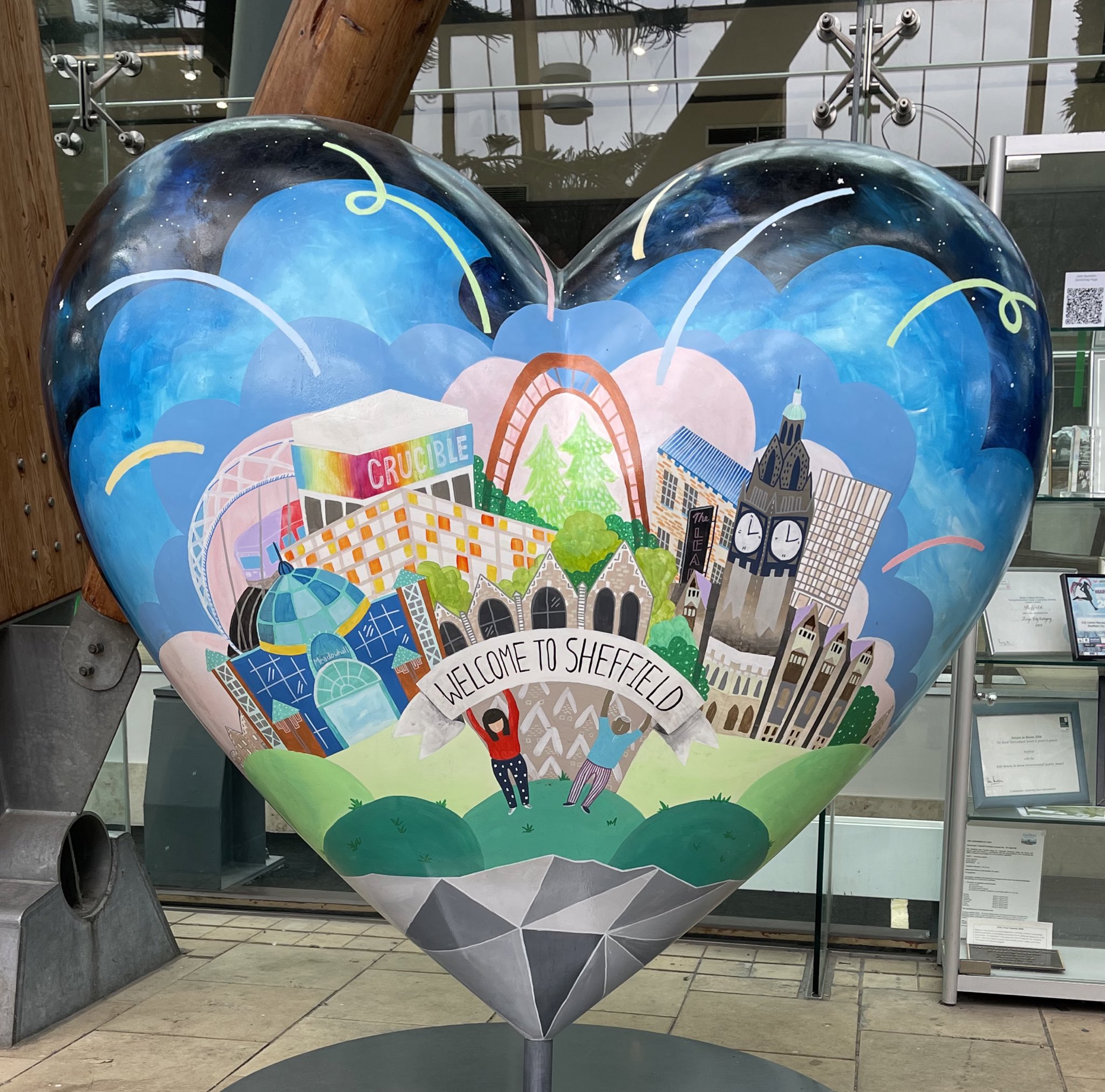
This picture was taken by young people with migratory backgrounds during an art workshop during the ‘Everyday Bordering in the UK’ project. For more information visit the project website.
Definitions of refugees, asylum seekers and vulnerability
In the UK, a refugee is an individual to whom the UK government has offered protection in accordance with the Refugee Convention 1951 and granted leave to stay. As such, a refugee is legally entitled to access services, housing and benefit support.
An asylum seeker is a person who has asked for protection but has not received a decision on their application to become a refugee, or is waiting for the outcome of an appeal. According to the UK policies, people who are still seeking asylum are entitled to a limited access to services.
People seeking asylum have also been noted in the evidence to have a ‘vulnerability’ which impacts on entitlement to services and support. ‘Vulnerability’ is a legal category that means a group of people requiring specific measures to safeguard their rights. For example, children and people with disabilities are considered to be ‘vulnerable’ groups. Therefore, there is an acknowledgement of the need to develop specific measures to accommodate the specific needs of certain groups of refugees and people seeking asylum.
Asylum policies across the UK
Seeking asylum is a human right. However, evidence highlights that recent politics in the UK and worldwide are becoming more restrictive and controlling. The UK government has responsibility for asylum and immigration policy for the whole of the UK (including Scotland, Northern Ireland and Wales).
The integration of refugees, however, is a ‘devolved matter’. This means that decision-making power has been transferred from the UK Parliament to other institutions across the four UK nations: the Scottish Parliament, the Welsh Parliament, the Northern Ireland Assembly, and the Local Authorities (LAs) in England. Each of these institutions is discussing the importance of a Refugee Integration Strategy but these are unevenly developed.
England is following the ‘integrated communities action plan’ published by the UK Government in 2019. The aim of this plan was to create a more integrated community.
Scotland has to follow the UK government national policies, and the Scottish Parliament has produced the New Scots Refugee Integration Strategy Delivery Plan 2024-2026 with six main goals, including – “New Scots live in safe, welcoming, inclusive communities, where everyone’s dignity is respected and everyone is able to build diverse relationships and healthy intercultural bonds” and “New Scots are able to access well-coordinated services, which recognise and meet their rights and needs”.
The complexity of the Northern Ireland context in terms of racism, asylum policies and the history of the country was also raised by the 2024/2025 IMPACT Network on ‘Strengthening Inclusion and Anti-racist practices’ run by the British Association of Social Workers (BASW) in NI. The Northern Ireland refugee integration strategy is still new and in development. A consultation started in 2021 and it was promoted by the Executive’s Racial Equality Strategy 2015 – 2025.
Wales is an important exception, not only in the UK context but in Europe because it is the only country which has declared itself as a “Nation of Sanctuary” in 2019 with the aim to be a welcoming place for refugees and asylum seekers.
Evidence noted that refugees and asylum seekers have very specific needs due to their forced migration, the risky journeys they face to arrive in the UK, and the challenges of starting a new life in the UK.
The review identified six main groups of needs:
Refugees and asylum seekers face unique health issues (PTSD, depression, chronic conditions). They can access NHS services, though asylum seekers face limitations. Here is a video about NHS entitlement.
Social care includes support with daily living and safeguarding. It’s not a public fund, so asylum seekers may access it under certain conditions.
Refugees can access benefits. Asylum seekers cannot claim most benefits but receive minimal support:
➔ Basic housing with no choice of location.
➔ Weekly allowance of £49.18 (or £9.95 if meals are provided).
➔ Most cannot work.
Understanding the system is complex. Language and cultural barriers make access difficult. Timely, translated, culturally appropriate information is essential.
The review identified a number of barriers for refugees and asylum seekers to access social and health care services. In this part of the document, we illustrate these barriers and how these impact on the general wellbeing of asylum seekers and refugees.
For example, reduced access to ESOL classes increased the risk of isolation on people seeking asylum and refugees. As a consequence, evidence highlights the negative effects on mental health and also how reduced English proficiencies stops refugees and people seeking asylum to seek for health support when needed.
The last part of the document focused on what can be done to provide good quality care to asylum seekers and refugees. This includes:
- Working in partnership with multiple organisations and professionals to provide integrated services.
- The importance of developing a local strategy to support refugees and people asylum
- Involving refugees and asylum seekers in the development of their services.
Three positive examples of service provision have been identified:
Meeting 1
During their first meetings, each local Network discussed the evidence shared with them. Discussions across the UK raised similar issues, though each place also had unique concerns.
Asylum policies and racism
Participants felt the UK environment has become less welcoming. Many still face discrimination and confusion about their rights. Both professionals and people with experience reported that racism is increasing and, as a consequence, people are scared to use services. People didn’t like labels like “asylum seeker” because they felt negative or with a strong stigma attached.
- People and professionals are confused about what refugees and people seeking asylum can access to.
- NRPF (No Recourse to Public Funds) is a major barrier.
- There are long waiting times and people often feel “passed around”.
- Digital systems make it harder to access help both in health and social care.
- Social workers often lack training on asylum issues, and services and support can differ between regions and local areas.
- Healthcare is improving but still has long waits, language barriers and, people with asylum experience felt that their problems are taken less seriously compared to other people.
- Third-sector organisations fill many gaps (e.g. interpreting, booking appointments, mental health support).
Trauma and mental health
People often arrive with trauma from war, violence, or dangerous journeys. Life in the UK can add more stress, uncertainty, poor housing, isolation, and repeatedly telling their story. There is a need for trauma-informed support across all services.
Housing, transport, safety
People often live for long periods in poor initial accommodation, like hotels, leading to isolation. Being moved around the UK with little control can trigger trauma. Some people are placed far from family or support Networks. Poor transport—especially in rural areas—makes isolation worse. Lack of legal aid increases vulnerability to exploitation.
Employment, education and ESOL
People seeking asylum cannot work. When people gain status, their overseas qualifications are often not recognised. ESOL classes are insufficient and hard to access. Missing documents and unclear education pathways create more barriers.
Networks felt some issues were missing from existing evidence, including:
- Problems linked to the lack of family reunion support
- Travel affordability (need for bikes, free/cheap transport)
- Childcare access to enable participation in services
- Lack of attention on cultural and spiritual needs (food, faith spaces)
- The need for better support for LGBT refugees, who are underrepresented
- Legal uncertainty about right to remain and citizenship pathways
- Volunteering opportunities as a route to integration and employment
Examples of positive practice include:
- Peer support – has been identified as the best support to any new arrival. Participants recognised that this is the best way to navigate the system, knowing where to find support and satisfy daily needs, including finding the right shop to find food from their own country. Peer Support can be informal or it could be provided by specific organisations.
- Trauma-Informed Approaches – Services and policies should be trauma-informed to avoid causing further harm and to sensitively address the complex needs of this population.
- Need to reduce “referral ping-pong” and streamline access points – Integration support should be adopted from the outset of the asylum procedure, not just after status is granted. This must be holistic, addressing housing, employment, language training, and community connection simultaneously.
- Projects like Walk and Talk are useful for reducing isolation, improving English, and boosting mental health. However, there is the need for structured integration programmes, not only social activities – practical life-skills support is missing for example, how to book an appointment.
- Culturally Competent Services – Providing culturally and linguistically tailored care with readily available, high-quality translation services and culturally competent staff is essential to improving access and health outcomes.
Social care