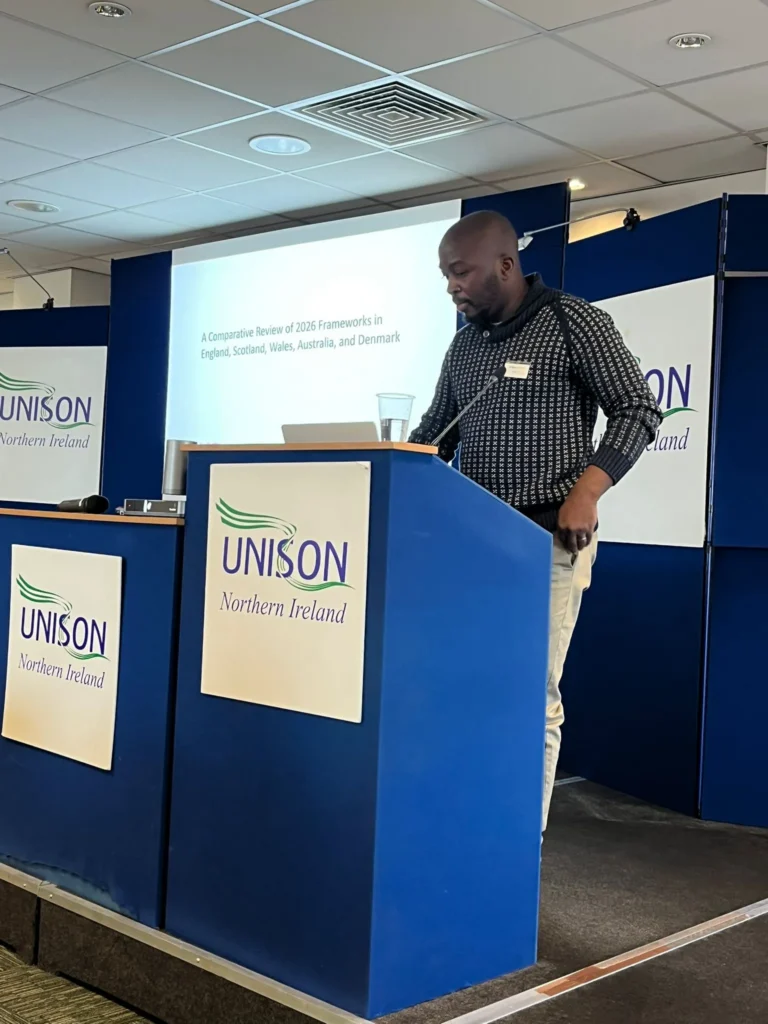
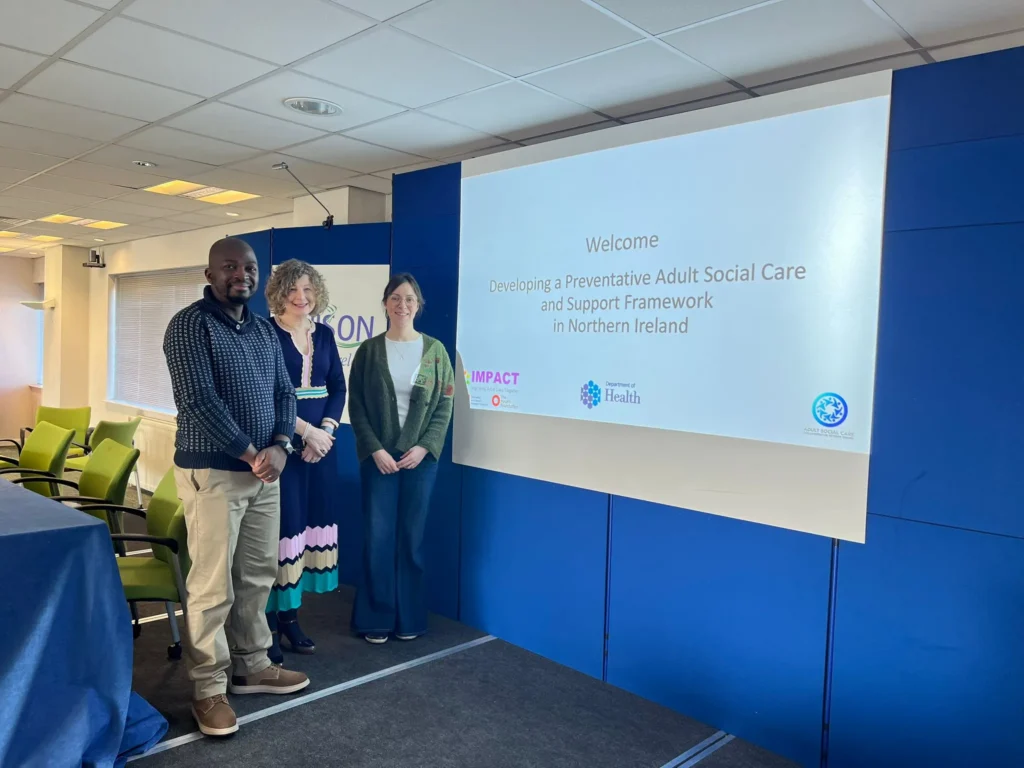
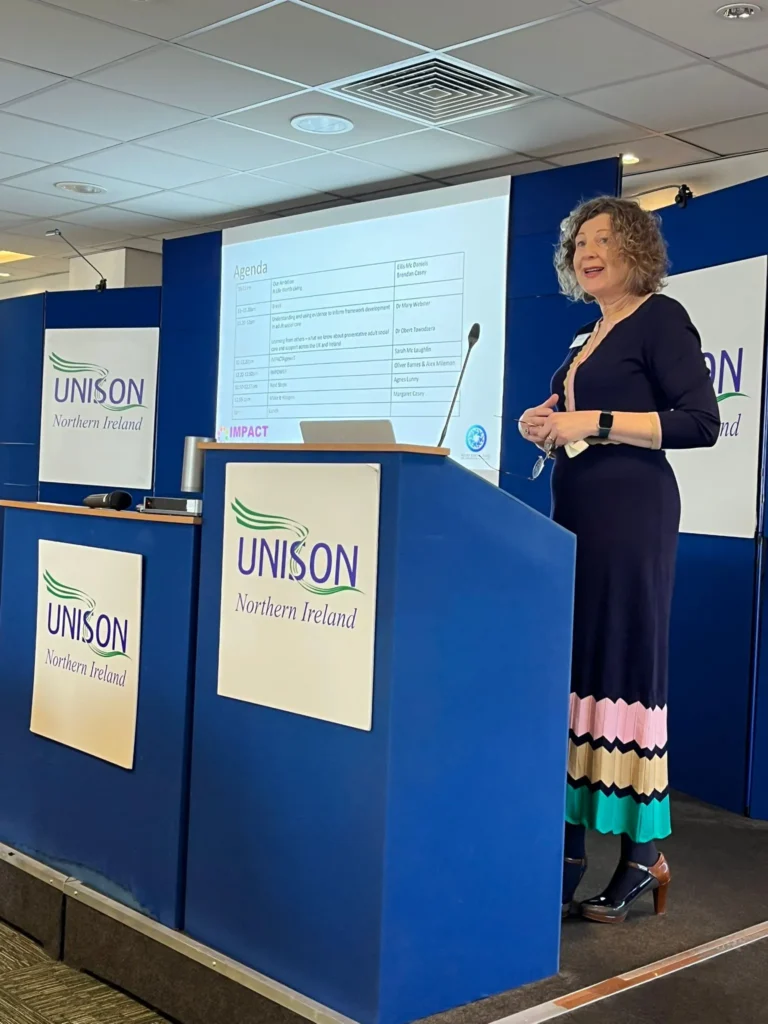
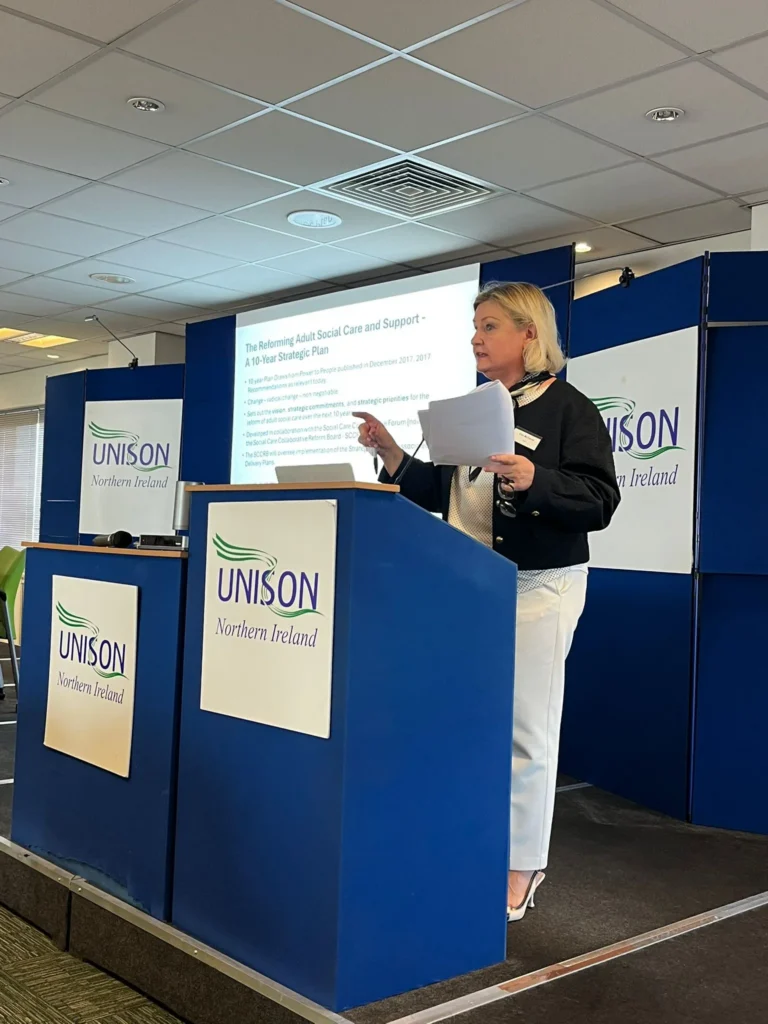
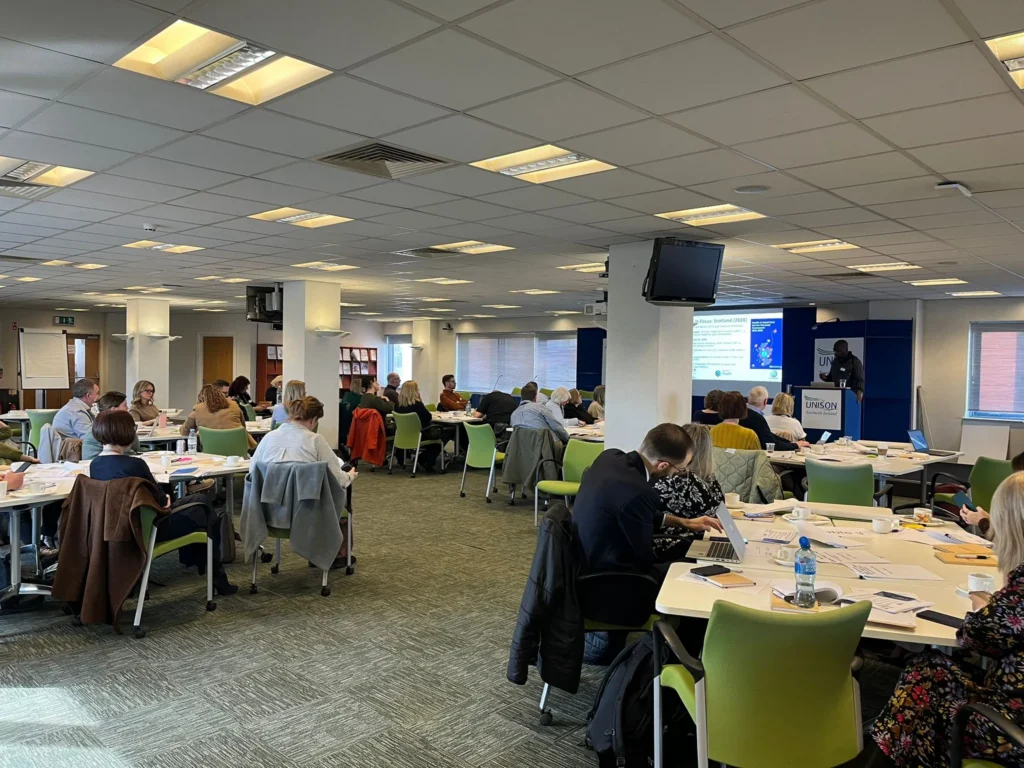
Last Friday in Belfast, we brought together people from across Northern Ireland’s adult social care system to explore a core question:
How do we help people live the lives they value — not just respond when things go wrong?
We heard from an excellent range of contributors — including Barbara Campbell, Eilis McDaniel, Brendan Casey, Mary Webster, Obert Tawodzera, Sarah McLaughlin, and colleagues from IMPOWER Consulting — who are helping ground the conversation in purpose, evidence, and possibility.
This work sits within the 10‑year Strategic Plan’s call to shift towards wellbeing, prevention, and community‑based support. It feels especially important in Northern Ireland, where strong community networks and committed practitioners already do preventative work every day, often without the recognition or stability they deserve.
What we explored together
Our early discussions focused on real experiences across NI:
- What’s already working well that we must protect?
- Where do gaps, bottlenecks, or “cliff edges” emerge for people?
- What would a preventative NI framework look like if we designed it around people’s lives, not organisational boundaries?
People highlighted the value of local relationships, rural community assets, and the quiet but essential work that keeps people well at home. They also highlighted where the system unintentionally makes early help harder than it should be.
Learning from evidence – and from each other
We heard about:
- what the evidence tells us about prevention,
- how other parts of the UK and Ireland are approaching this,
- what types of data will actually help NI understand outcomes,
- whose voices we still need to bring in.
The key is not to “lift and drop” models from elsewhere, but to understand what genuinely fits Northern Ireland’s integrated structures, rural/urban mix, and community strengths.

What would we do differently tomorrow?
We asked each table a question:
If we truly believed adult social care in Northern Ireland exists to enable a life worth living, what would we do differently tomorrow?
Common suggestions included strengthening community links, carving out space for preventative conversations, improving information sharing, and valuing the contribution of carers and local groups earlier.
What happens next
Over the coming weeks, IMPACT will:
- bring together today’s insights,
- identify the most relevant evidence and data for NI,
- highlight gaps that need further exploration,
- widen engagement with communities and organisations not yet involved,
- begin shaping the first outline of a Northern Ireland-specific preventive framework.
This isn’t about another document – it’s about creating the conditions for earlier, better support that reflects the realities of life in Northern Ireland.